NUST or GIKI is often framed as a ranking question. For an applicant, the more useful starting point is the degree you want, the cost you can sustain and the admission tests you can prepare for in time.
Both institutions offer engineering and computing routes, but their merit formulas and calendars differ. A strong NET plan can support the shared subjects. It does not replace checking GIKI's current test instructions or submitting its separate application.
Compare the differences
| Planning point | NUST | GIKI |
|---|---|---|
| Separate university application | Yes | Yes |
| Engineering Mathematics and Physics preparation | Yes | Yes |
| Multiple NET series available | Yes | No, check GIKI's own window |
| Negative marking | No, NET | Not stated, confirm current instructions |
How to use this in your plan
Begin with the shared Mathematics and Physics topics, then compare each test's English requirements and current marking rules. Do not infer a current negative-marking rule from an old sample paper.
NUST's series give you opportunities to improve a score during the cycle. Treat GIKI's published test window as its own deadline. If you want both options, finish the application work before the final revision weeks.
Compare the actual degree and campus life as well as the admission route. A preparation decision should keep options open rather than turn a test score into a judgement about an entire university.
Understand the different merit formulas
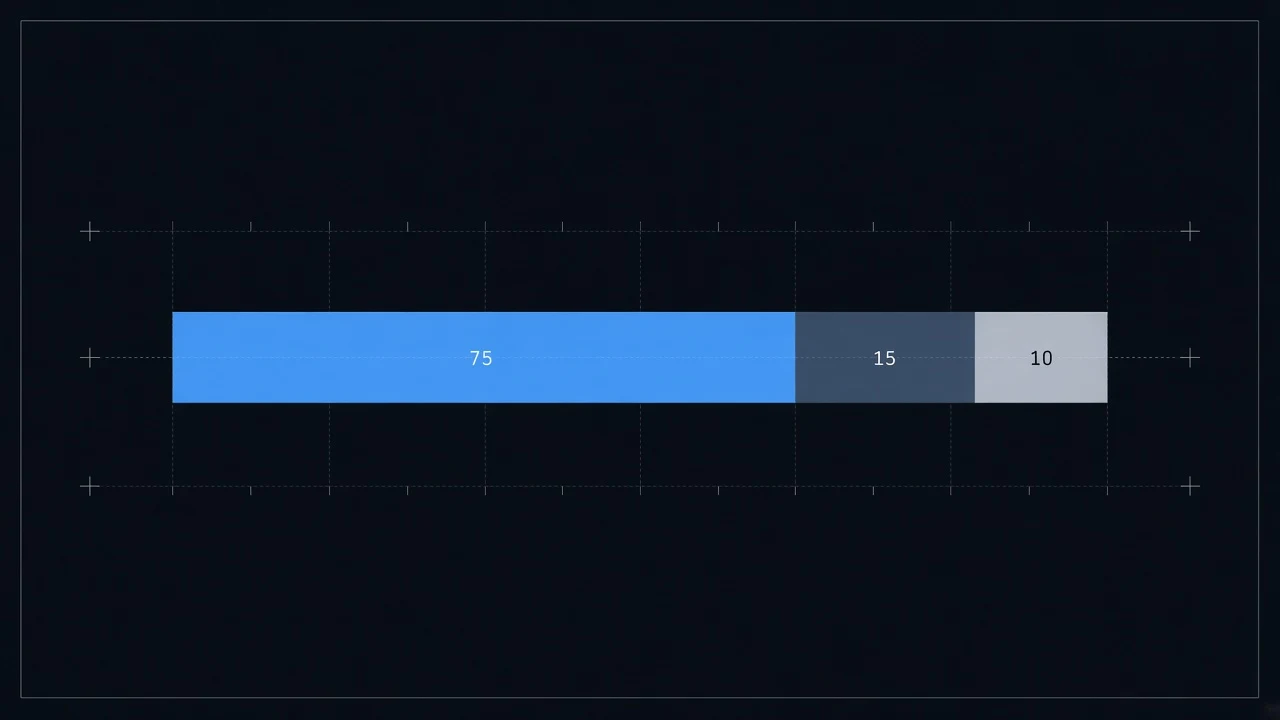
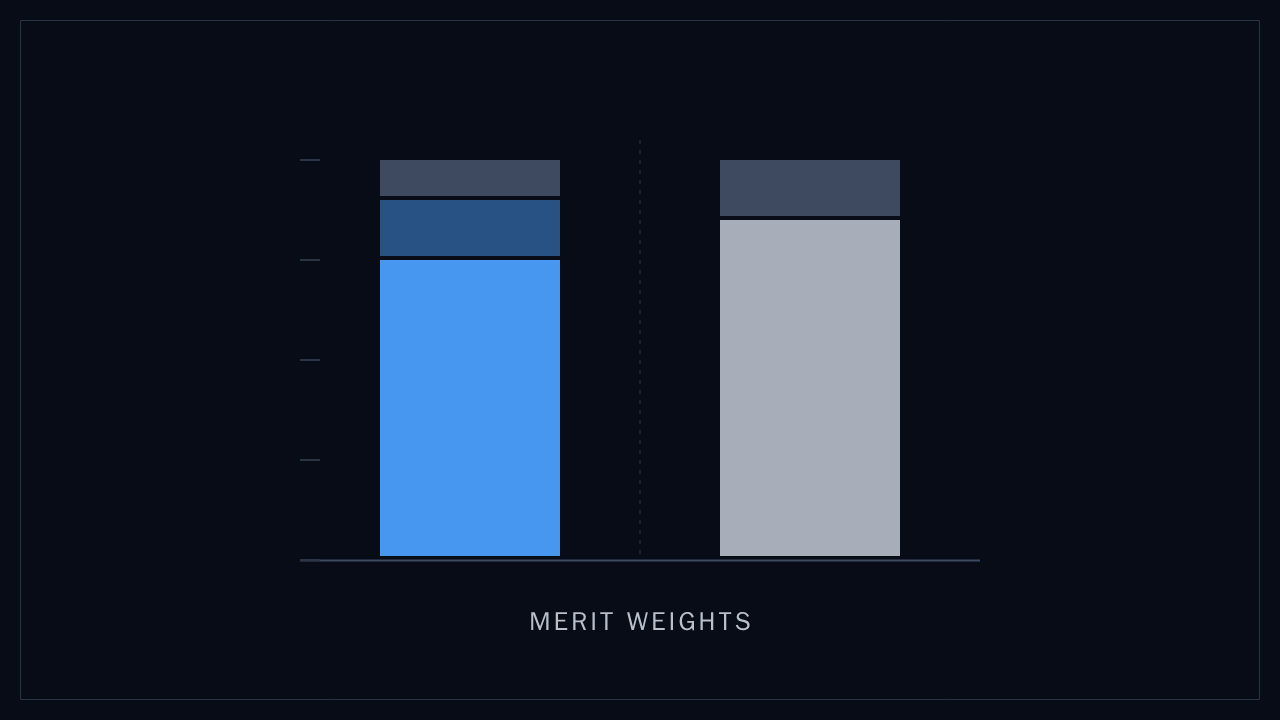
NUST  = NET% x 0.75 + HSSC% x 0.15 + SSC% x 0.10
GIKI  = test% x 0.85 + SSC% x 0.15
At GIKI the 15% goes to SSC for FSc students. O-Level candidates use O-Level equivalence. Candidates with an American or Canadian high school diploma, an IB diploma, a B.Sc. or a DAE use their last completed qualification.
Take a student with 900/1100 in matric (81.8%), 450/550 in FSc Part-1 (81.8%) and 65% on each test:
NUST  = 65 x 0.75 + 81.8 x 0.15 + 81.8 x 0.10 = 48.75 + 12.27 + 8.18 = 69.20
GIKI  = 65 x 0.85 + 81.8 x 0.15             = 55.25 + 12.27        = 67.52
You cannot compare those two totals with each other. Each university ranks you against its own applicants. What you can compare is what each mark is worth:
- One percentage point on the test is worth 0.75 aggregate points at NUST and 0.85 at GIKI.
- Your FSc result is worth up to 15 points at NUST and nothing at GIKI.
- Matric is worth 10 points at NUST and 15 at GIKI.
So a student with a strong matric and a weak FSc Part-1 loses less at GIKI. A student whose FSc is the strongest thing on the form gets credit for it only at NUST. Run your own numbers on the aggregate calculator, and read the NET merit formula post for the 550 versus 1100 detail.
Check eligibility before planning tests
Both ask for 60%, but they measure it differently.
NUST wants at least 60% in SSC and in HSSC. Pre-Engineering, ICS and Pre-Medical students can all sit NET-Engineering. Pre-Medical students without additional Mathematics have conditions. For engineering they must clear NUST's 8-week condensed Mathematics course before admission.
GIKI wants 60% or more in each of Mathematics, Physics and overall, not only overall. For engineering that means HSSC Pre-Engineering, ICS, or Pre-Medical with additional Mathematics. For AI, CS, Cyber Security, Data Science and Software Engineering, GIKI accepts HSSC with Mathematics, Physics and any third elective. GIKI's FAQ is blunt about Pre-Medical: without additional Mathematics you can apply only to BS Management Sciences.
If you are Pre-Medical and never took additional maths, NUST is the one with a route into computing and engineering. If your Physics mark in FSc is under 60% while your overall is above it, check GIKI's rule before you pay the fee.
Your next step
Check which NET paper you need, calculate your NUST aggregate, and add both application deadlines to your calendar.
Use chapter practice for the shared concepts. The multi-test guide explains how to leave room for test-specific work rather than switching formats in the final days.
Sources and scope
- NUST merit: NET 75%, HSSC 15%, SSC 10%
- GIKI merit: admission test 85%, SSC or equivalent 15%
Source: NUST merit criteria, salient features and dates pages; GIKI undergraduate admissions, eligibility and how-to-apply pages; checked October 2026