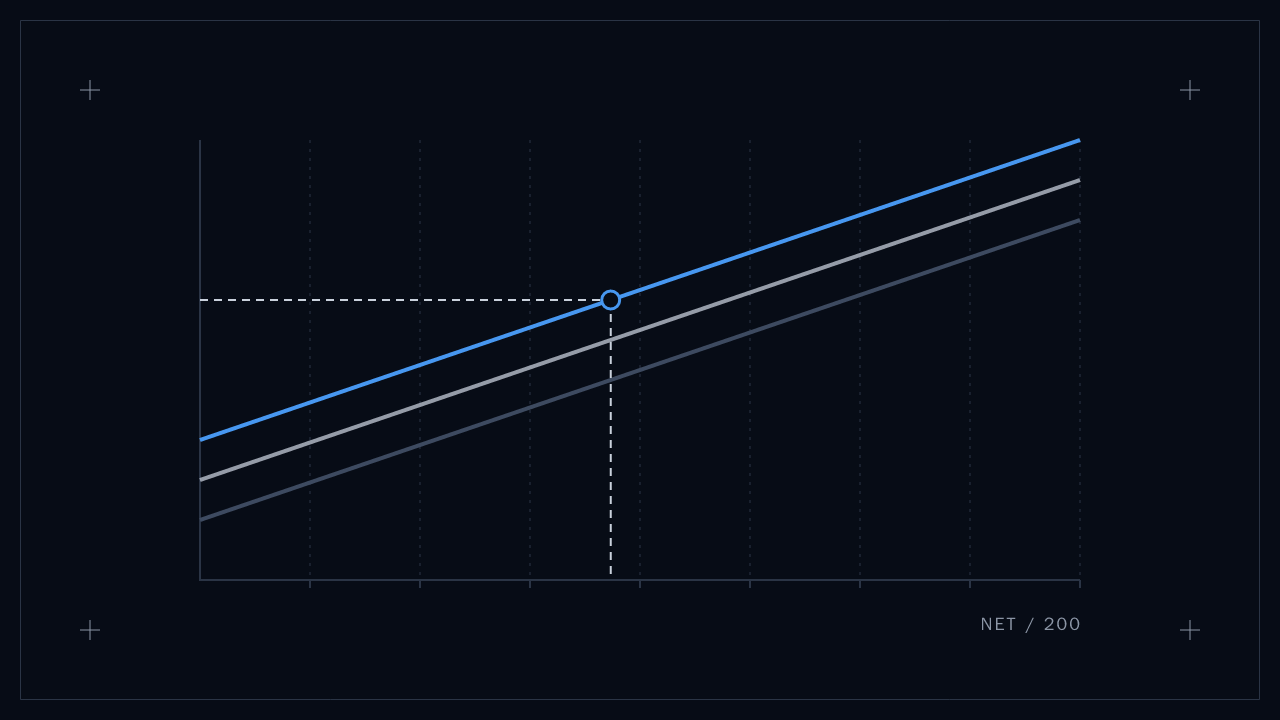
Two applicants can have the same NET score and different NUST aggregates. The missing information is their academic record: NET contributes most of the formula, but SSC and HSSC marks still affect the result.
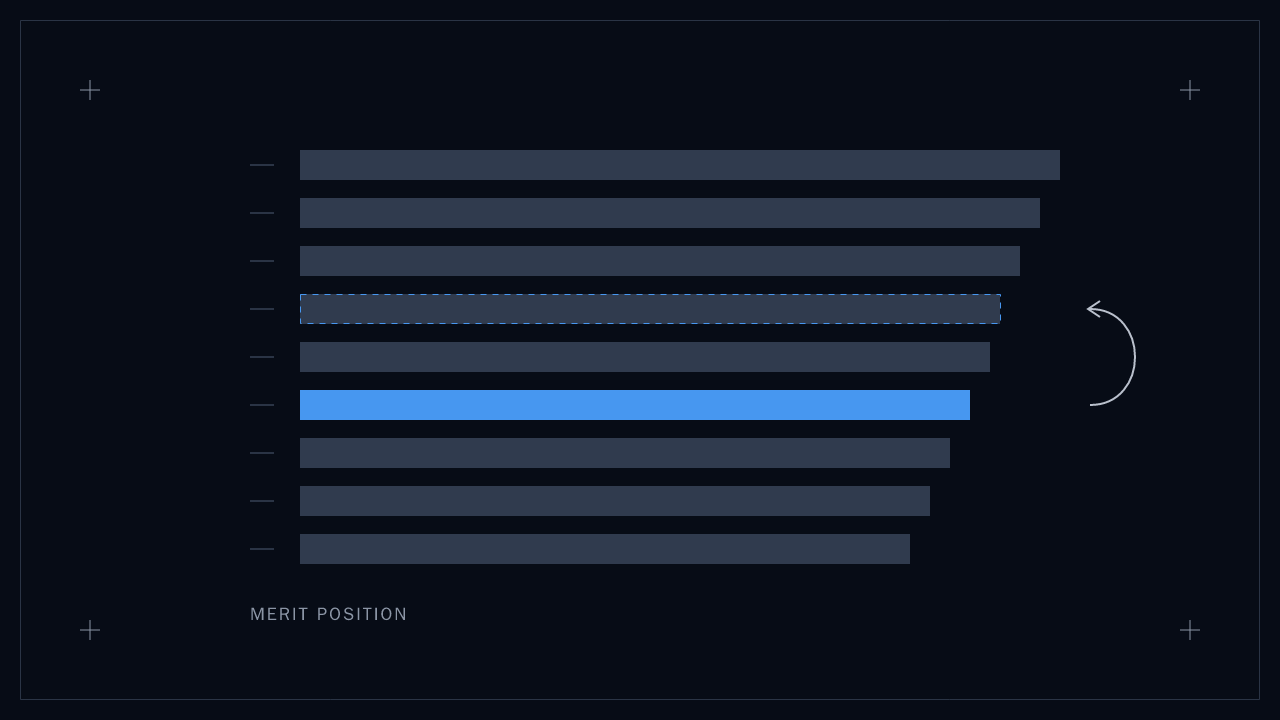
Use the formula to understand your own position before comparing scores with someone else. An aggregate is a calculated percentage. A merit position is your rank in the relevant applicant group, and neither is a guaranteed offer by itself.
Keep marks, percentages and rank separate
Take the marks and totals from the documents NUST asks you to use. Convert each result to a percentage, apply its weight and add the contributions. Do not mix raw marks from one component with a percentage from another.
Check which rule applies if you are an A-Level final-year applicant or your final result is pending. The document basis matters as much as the arithmetic.
When setting a preparation target, calculate what another NET mark changes. This helps you make a realistic plan without pretending to know the eventual closing merit.
Apply the published weights
NUST generates merit from three components:
aggregate = (NET / 200) * 75
        + (HSSC / 550 or 1100) * 15
        + (SSC / 1100) * 10
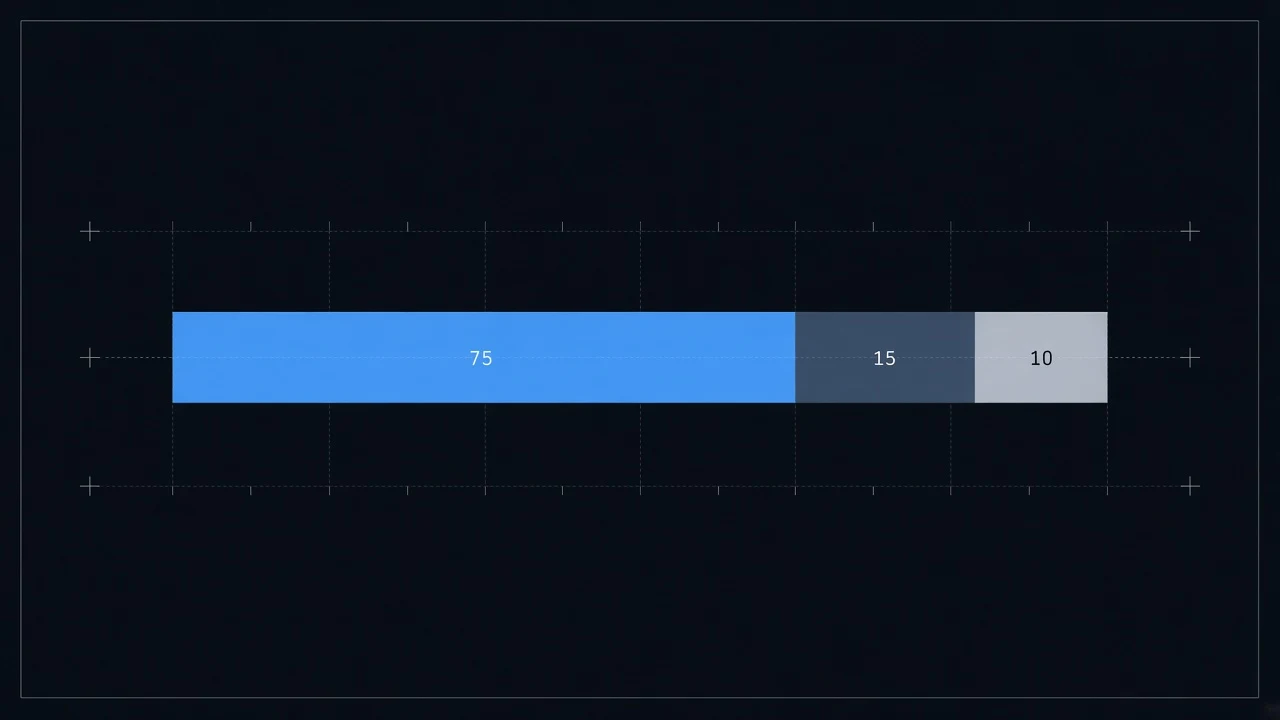
NET carries 75%, your HSSC marks carry 15%, and your SSC marks carry 10%. Two details in that middle line decide most edge cases:
- If you apply after only Part-1 of HSSC, your HSSC component is measured out of 550 marks.
- If you already have the full FSc or HSSC result, it is measured out of 1100.
- A-Level final-year candidates have no HSSC result yet, so O-Level equivalence carries 25% instead of the SSC 10%.
There is also a floor below all of this: you need at least 60% in both SSC and HSSC just to apply. A strong NET score does not rescue a 58% in matric.
Follow one calculation
Take a candidate applying with HSSC Part-1 only:
| Component | Marks | Out of | Weight | Contribution |
|---|---|---|---|---|
| NET | 145 | 200 | 75% | 54.38 |
| HSSC Part-1 | 462 | 550 | 15% | 12.60 |
| SSC | 968 | 1100 | 10% | 8.80 |
| Aggregate | 75.78 |
Now change one number. The same candidate with NET 165 instead of 145 lands on 83.28. Seven and a half aggregate points from twenty MCQs. That is the entire argument for taking the test seriously: nothing else in the formula can move that fast.
Check the inputs before trusting the total
Treating NET 150 as a fixed cutoff. Programmes close at different aggregates every series because the merit list is ranked, not thresholded. Your 75.78 means nothing until it is ranked against everyone who applied that series.
Forgetting the best-score rule. NET runs four series a year, and your best score across series is the one used for merit. Sitting an early series with imperfect preparation costs you a fee, not your future.
Rounding school marks. 462 out of 550 is 84%, and 84 is what goes in. Do not round it to 85 in your own spreadsheet and then act surprised.
Your next step
Enter your own results in the aggregate calculator, then compare with the working here. Read how merit lists work before interpreting the percentage.
The score-target guide works backwards from an illustrative target. Use chapter practice to turn that target into specific preparation.
Sources and scope
The official formula gives NET 75%, HSSC 15% and SSC 10% in the standard case. Final-year A-Level applicants have a separate published equivalence rule.
Source: NUST merit-generation criteria, reviewed October 2026