Choose your NET paper from the degree requirements, not only from the subjects you studied at college. The same academic background can lead to different paper choices, and some programmes have special routes.
Start with the programme you want, check eligibility, then identify the paper NUST accepts for it. This step belongs before registration and before buying a preparation course, because the subject mix shapes the whole plan.
Connect the programme, background and paper
Make a shortlist of intended degrees and the academic background you will apply with. Check the current eligibility and merit tables against that shortlist. Where several paper routes exist, read the programme-specific rule rather than guessing.
Do not assume that Computer Science applicants take a separate Computer Science paper. The main Computing route uses NET-Engineering, including Mathematics and Physics.
For unusual combinations or Additional Mathematics, confirm the requirement directly with admissions. An informal answer based on another candidate's degree can send you to the wrong test.
Compare the paper categories
| Paper | Subjects and weighting | Who it is for |
|---|---|---|
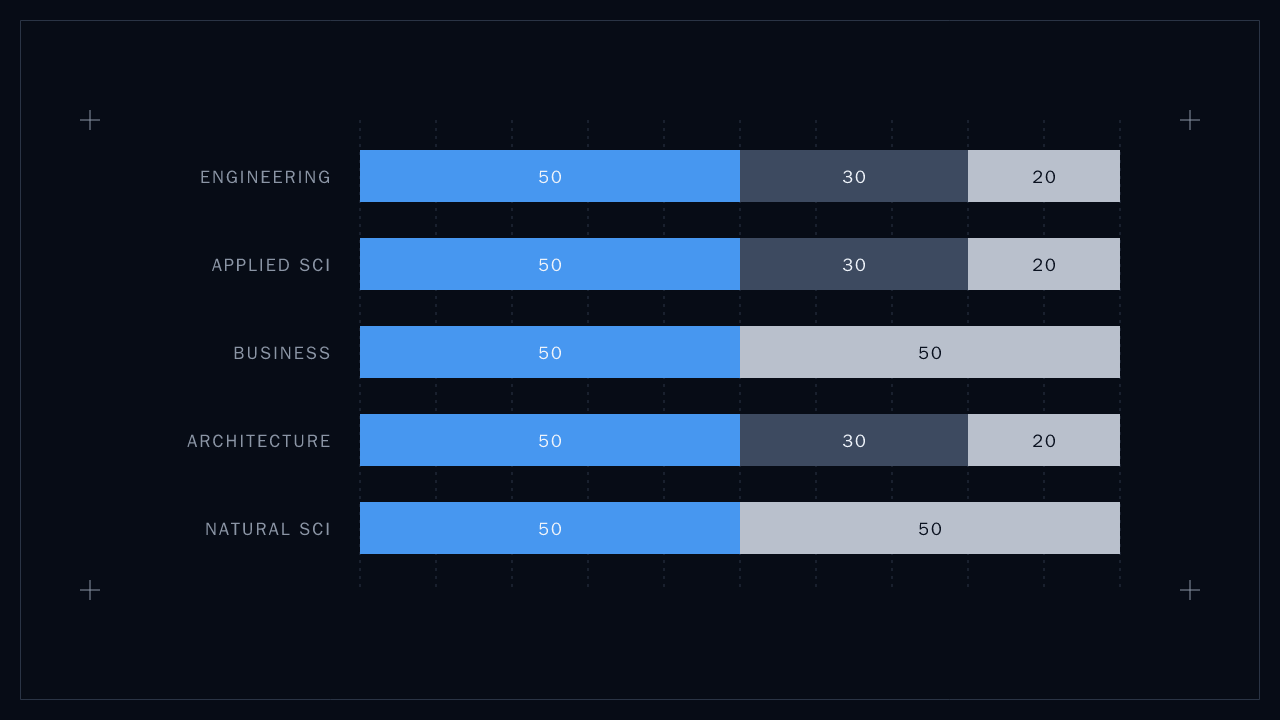
| NET-Engineering | Mathematics 50%, Physics 30%, English 20% | Engineering, Computing, and some BS sciences |
| NET-Applied Sciences | Biology 50%, Chemistry 30%, English 20% | Life and applied sciences |
| NET-Business & Social Sciences | Quantitative Maths 50%, English 50% | Business, humanities, law |
| NET-Architecture | Design Aptitude 50%, Mathematics 30%, English 20% | B Architecture and B Industrial Design |
| NET-Natural Sciences | Mathematics 50%, English 50% | BS Maths, Physics, Chemistry from non-standard backgrounds |
Every paper is 200 MCQs in 180 minutes. NUST publishes the percentages, not question counts, so a 50% subject works out to roughly 100 questions.
Engineering and Computing route
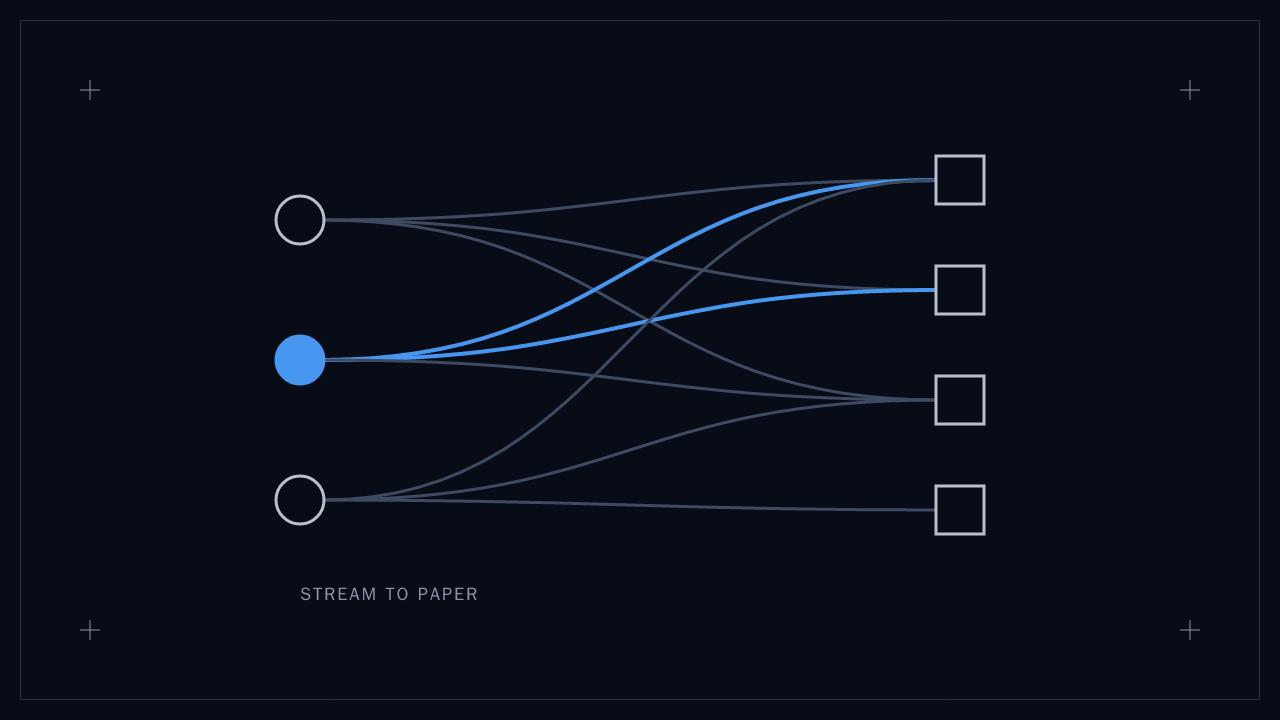
This is the paper most candidates sit. It opens every Engineering discipline and every Computing degree: BS Computer Science, Software Engineering, Artificial Intelligence and Data Science. The same registration also lets you apply for BS Robotics & Artificial Intelligence, Bioinformatics, Mathematics, Physics, Chemistry and Food Science & Technology, with no extra fee and no separate NET.
Half the paper is Mathematics. If you are weak in one subject here, make it English, not maths. A 10% swing in Mathematics moves your NET score twice as far as the same swing in Physics.
Applied Sciences route
Biology replaces Mathematics. This is the route for pre-medical students who want Biotechnology, Environmental Science, Agriculture, Food Science & Technology, Bioinformatics, Chemistry or Physics at NUST.
Four of those, Bioinformatics, Chemistry, Physics and Food Science & Technology, can also be reached through NET-Engineering. If you are in that overlap, sit the paper whose heavy subject is your strongest.
Business and Social Sciences route
No Physics, no Chemistry, no Biology, and any HSSC subject combination can sit it. It is an even split between Quantitative Mathematics and English. It opens BBA, Accounting & Finance, Economics, Psychology, Public Administration, Mass Communication, LLB, Tourism & Hospitality Management, Liberal Arts & Humanities and International Relations.
With English at 50%, reading speed matters more here than in any other paper. A hundred English MCQs in a shared 180-minute clock rewards candidates who read fast and accurately.
Architecture route
This paper is only for B Architecture and B Industrial Design. Half of it is Design Aptitude, which tests spatial and visual reasoning instead of syllabus recall. The other half is Mathematics and English. SADA publishes separate guidelines for the design section, and you should read them before you register.
Natural Sciences route
This one is easy to miss. It exists for candidates who want BS Mathematics, Physics or Chemistry but did not come through the standard academic stream for it. The paper is half Mathematics, half English.
Your next step
Use the eligibility guide and official subject split together. Then follow the registration steps.
Choose practice chapters only after the paper is clear. For Pre-Medical or ICS conditions, read the background-specific guide as well.
Sources and scope
Check the official paper and programme rules against your academic background. A programme can have conditions beyond the name of its NET paper.
Source: NUST subject weightings and programme-wise merit criteria; reviewed October 2026