If you want Computer Science at NUST, begin with the actual programme and school rather than a target score shared in a group chat. Computing degrees can have different names and campus options, while admission depends on eligibility, merit and your preferences.
For the main NET route, Computing applicants sit NET-Engineering. That means preparing Mathematics, Physics and English, even if the degree you want is not called Engineering.
Choose the degree, then plan the test
Check which school offers the degree you would accept. Computer Science, Software Engineering, Artificial Intelligence and Data Science overlap, but they are not interchangeable labels. Read course outlines before ranking them.
Then check your academic background and any additional conditions. Pre-Medical applicants should distinguish Computing deficiency Mathematics from Engineering's requirements. ICS applicants still prepare Physics for NET-Engineering.
Set a test target using your own board marks and the merit formula. A score someone else needed in a previous cycle is context, not a guaranteed threshold for you.
Find the computing programme and school
NUST's official programme list splits these degrees across schools. BS CS, AI and Data Science sit under "Computing". Software Engineering and Computer Engineering sit under "Engineering".
| Programme | Schools |
|---|---|
| BS Computer Science | SEECS (Islamabad), NBC (Quetta), PNEC (Karachi) |
| BS Artificial Intelligence | SEECS (Islamabad), NBC (Quetta) |
| BS Data Science | SEECS (Islamabad) |
| Software Engineering | SEECS (Islamabad), MCS (Rawalpindi) |
| Computer Engineering | SEECS (Islamabad), CoEME (Rawalpindi) |
| BE Information Security | MCS (Rawalpindi) |
| BS Bioinformatics | SINES (Islamabad) |
NUST also adds BS Robotics and Artificial Intelligence from Fall 2027 at SMME and CoEME. It uses the same NET-Engineering paper.
The split between computing and engineering is more than a label. During selection NUST lets you change preferences within a discipline group, and Computing and Engineering are separate groups. Rank both if you would take either.
Check your background and conditions
You need SSC and HSSC with at least 60% in each. For the computing degrees (BS CS, Data Science, AI and Bioinformatics) NUST accepts any of these HSSC groups:
- Pre-Engineering
- ICS (Mathematics, Physics, Computer Science)
- Pre-Medical
- Any HSSC with Mathematics as a compulsory subject
The Pre-Medical route has a catch. If you did not take additional Mathematics, you sit NET-Engineering anyway, and after admission you must clear 6 credit hours of deficient Mathematics courses within one year.
Software Engineering and Computer Engineering are engineering degrees, so the engineering rules apply. ICS students can apply but must clear Chemistry as a remedial course in the first semester. Pre-Medical students without additional Maths must pass NUST's 8-week online Mathematics course before admission. For NET-2027 NUST says that means finishing it before 25 July 2027 with at least 60%.
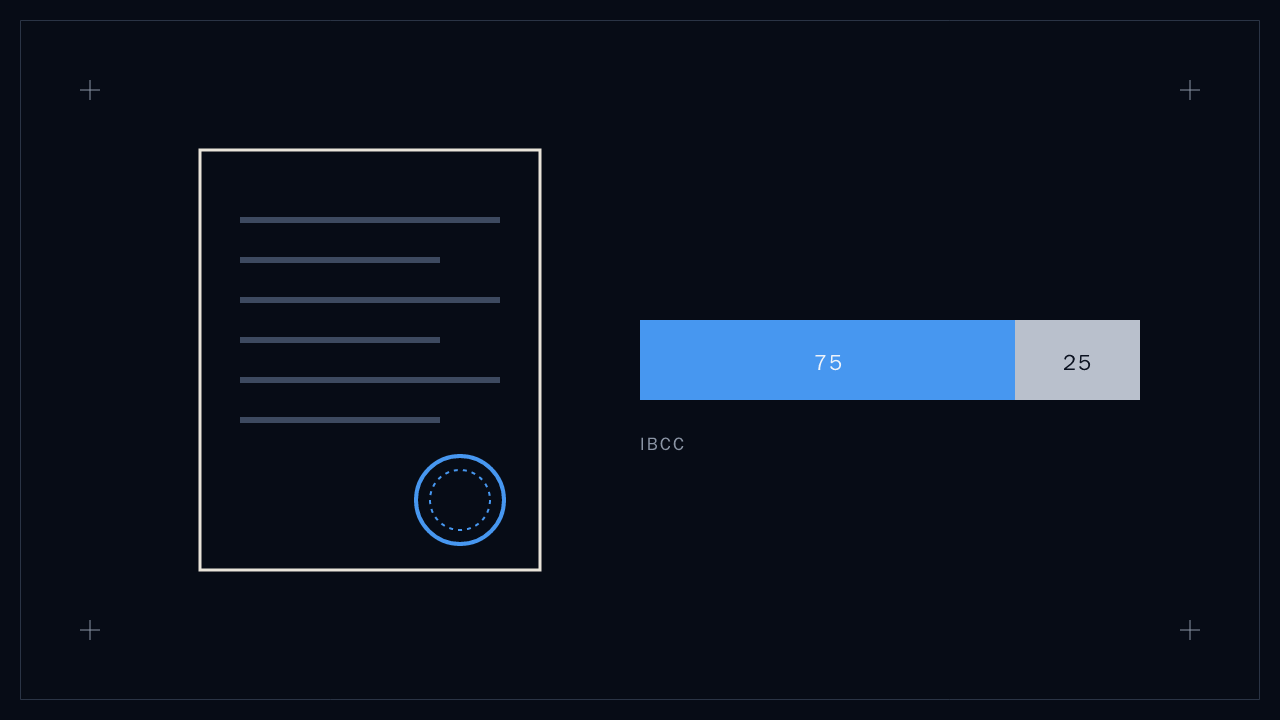
A-Level students apply on their O-Level IBCC equivalence and confirm later with the A-Level equivalence. The A-Level guide covers that route.
Prepare the Engineering paper
Every computing applicant sits NET-Engineering. NUST publishes the weights as percentages: Mathematics 50%, Physics 30%, English 20%. On a 200-question paper that works out to roughly 100, 60 and 40 questions. That split is derived from the weights. NUST does not publish it.
Half the paper is Mathematics, and the computing merit list is ranked mostly on NET. So your maths score decides your CS seat more than anything else. Calculus and coordinate geometry take up a large share of the FSc maths syllabus, so start with differentiation, integration and analytical geometry.
Your next step
Use the aggregate calculator and score-target guide to understand the numbers. Read how merit lists work before ordering preferences.
For study, the Mathematics guide and chapter bank can turn broad "CS preparation" into specific work. Move to timed Engineering papers when you have covered enough to learn from them.
Sources and scope
- Paper: NET-Engineering, Mathematics 50%, Physics 30%, English 20%
- Minimum 60% in SSC and in HSSC (or IBCC equivalence)
Source: NUST eligibility criteria, subjects included in NET, list of UG programmes, checked October 2026
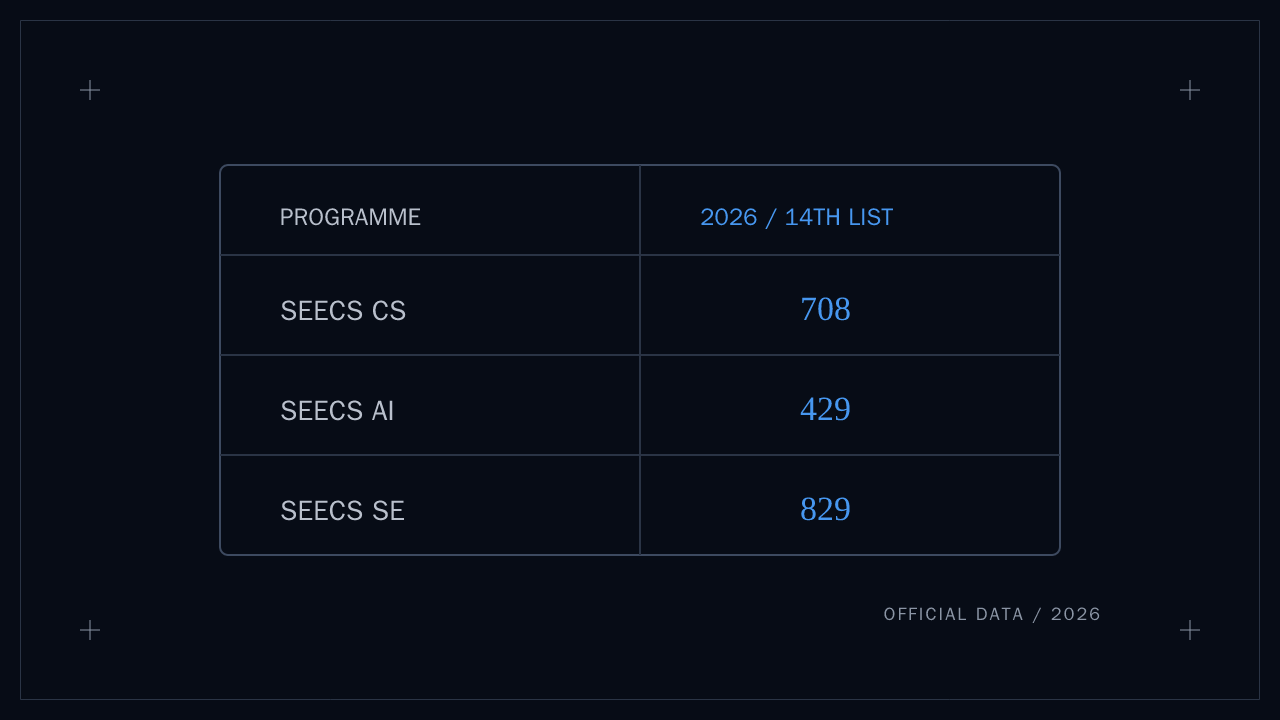
2026 closing merit positions
| Programme | Institute | Code | 2026 closing position |
|---|---|---|---|
| BE Software Engineering | SEECS | S605 | 829 |
| BE Software Engineering | MCS | Y605 | 3716 |
| BE Computer Engineering | SEECS | S608 | 850 |
| BE Computer Engineering | CEME | W608 | 2172 |
| BE Information Security | MCS | Y614 | 4182 |
| BS Computer Science | SEECS | S642 | 708 |
| BS Computer Science | PNEC | P642 | 3025 |
| BS Computer Science | NBC | Q642 | 8419 |
| BS Artificial Intelligence | SEECS | S680 | 429 |
| BS Artificial Intelligence | NBC | Q680 | 8444 |
| BS Data Science | SEECS | S673 | 843 |
| BS Bioinformatics | SINES | R665 | 268 |
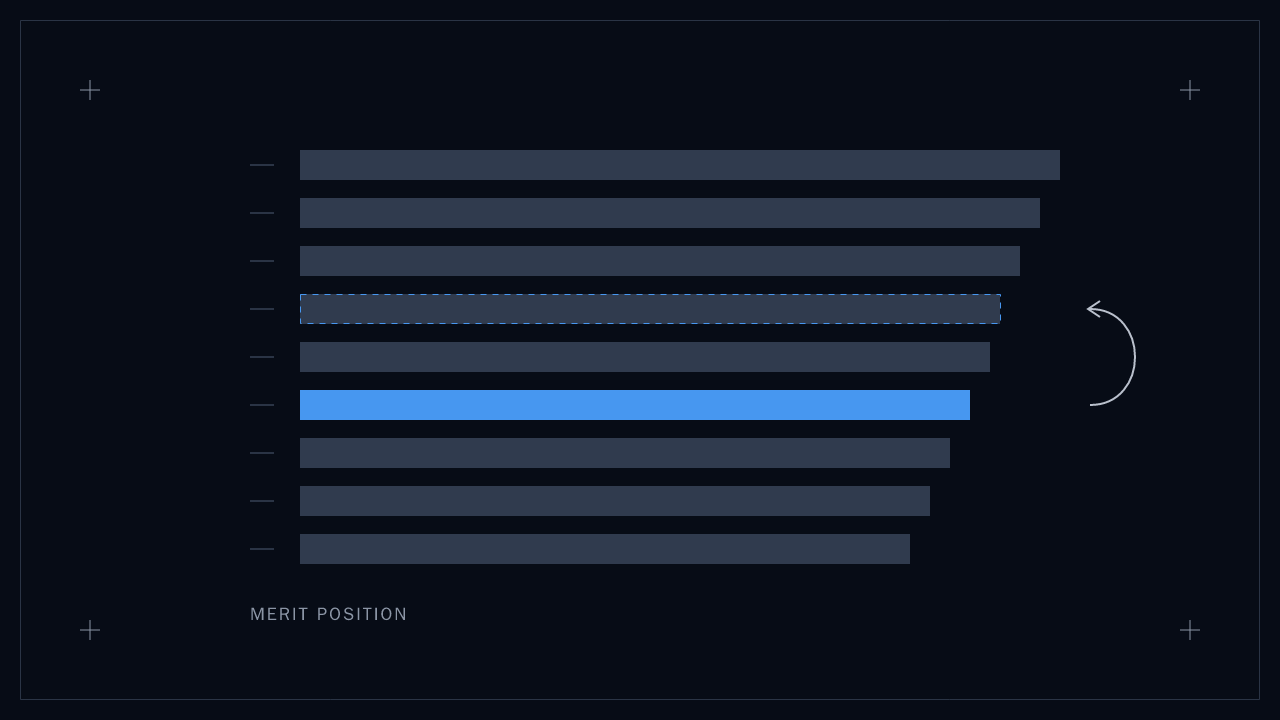
Source: NUST Admissions Directorate, 14th merit selection list, UG 2026. These are ranks within the relevant merit pool, not marks or aggregate percentages. See all NUST closing merit 2026 positions for the full record and guidance on preferences.
How to prepare for this programme's NET paper on SailToNUST
Check your paper in the NET syllabus, then use the aggregate calculator to set a practice target from your own marks. Match practice to that paper. Engineering applicants can use a timed full paper; other categories should use the relevant subject drills and prepare any category-specific material separately.