A-Level applicants face two preparations at once: learning the parts of HSSC-based NET that differ from their course, and getting the equivalence documents right. A good test score cannot fix a missing qualification document at admission.
NUST uses IBCC equivalence for O/A-Level qualifications. For applicants in A-Level final year, its published merit rule uses NET and O-Level equivalence with the stated weights. Use the actual equivalence marks, not a conversion you made from grades yourself.
Plan documents and subject gaps together
Make a document checklist early. Record the IBCC application steps, your result dates and NUST's final-document requirements. Check how your subject combination maps to the degree rather than assuming every science combination has the same eligibility.
For preparation, compare the HSSC topics with what you already know. Revise overlapping concepts through questions, and give unfamiliar notation or topics their own lessons. You do not need to relearn every familiar chapter from the start.
Practise the NET format as well as the content. A-Level-style written work may develop understanding without training the same multiple-choice decisions or pace.
Use the right equivalence in the formula
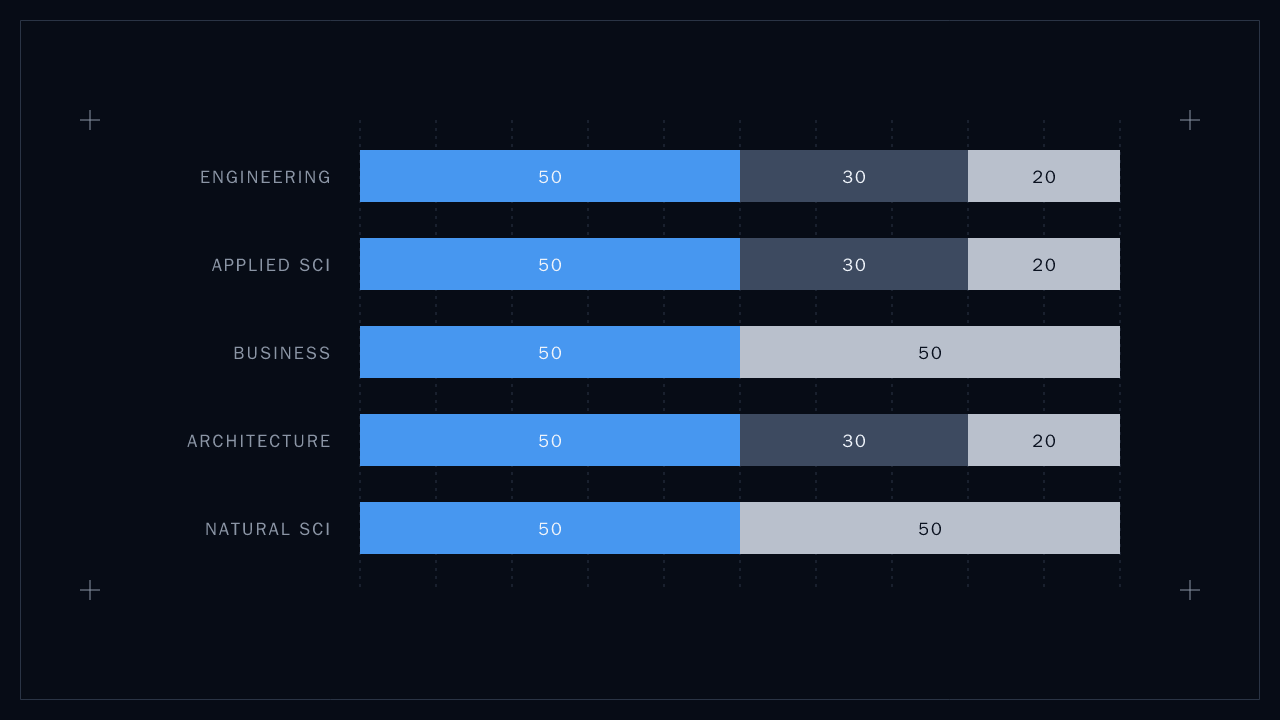
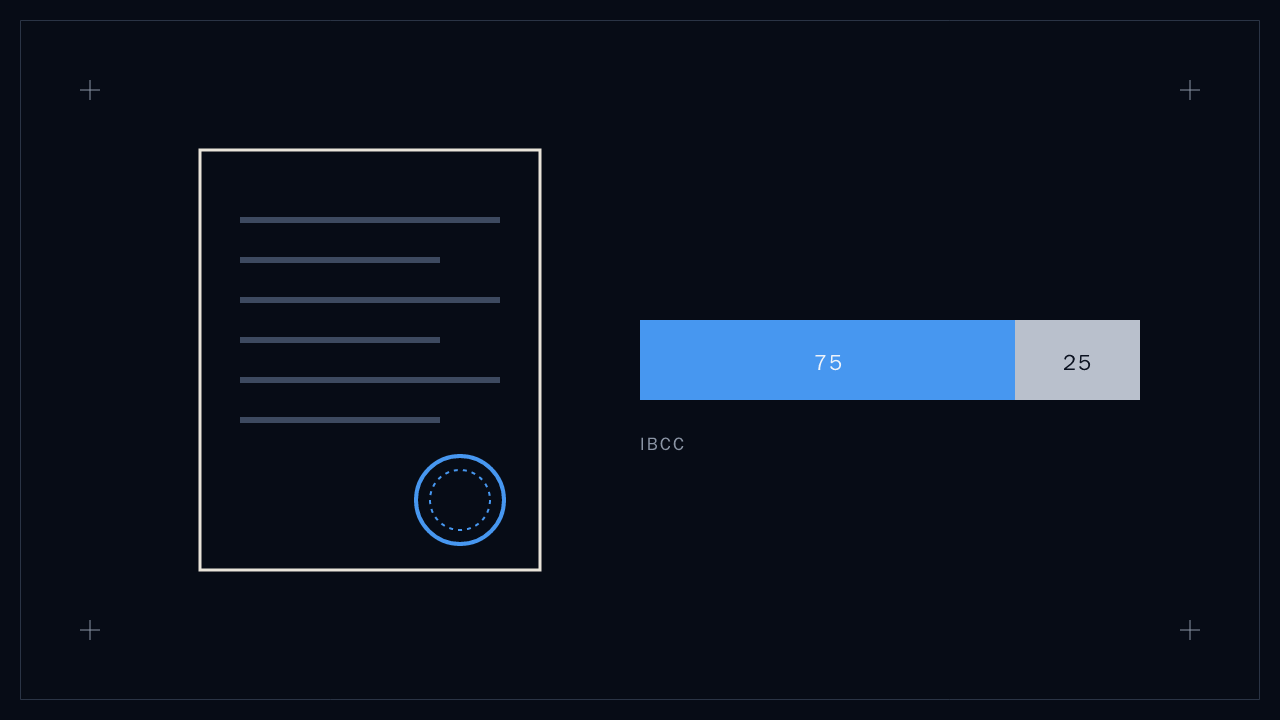
FSc students get 75% NET, 15% HSSC and 10% SSC. You have no HSSC result when you apply, so NUST gives your O-Level equivalence the whole 25%:
aggregate = (NET / 200) * 75 + (O-Level equivalence marks / total) * 25
Take O-Level equivalence of 80% and a NET score of 150:
| Component | Score | Weight | Points |
|---|---|---|---|
| NET | 150 / 200 | 75% | 56.25 |
| O-Level equivalence | 80% | 25% | 20.00 |
| Aggregate | 76.25 |
Two things follow from this. Each O-Level percentage point is worth 0.25 aggregate points, more than an HSSC point is worth to an FSc student (0.15). And if you apply in final year, your A-Level grades do not enter the aggregate at all. They only have to clear the eligibility bar.
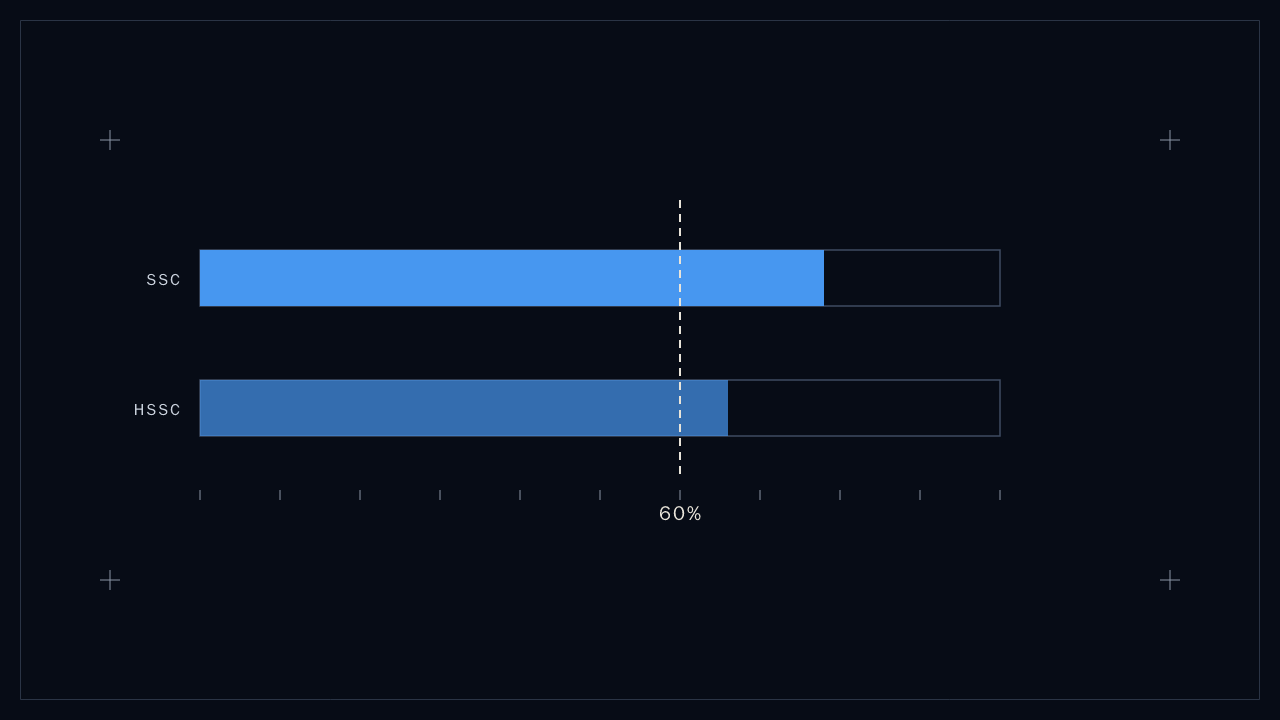
If you have already finished A-Level when you apply, the 25% rule does not apply. NUST's general table puts A-Level in the HSSC slot, so you get the usual split: NET 75%, A-Level equivalence 15%, O-Level equivalence 10%.
The aggregate calculator has an A-Level option for the final-year formula.
Prepare the IBCC documents
IBCC is the Inter Boards Coordination Commission. It converts your O-Level and A-Level grades into marks equivalent to Matric and FSc. NUST's rules on this are strict:
- Applying: you need a valid IBCC O-Level (SSC) equivalence certificate when you apply. Without one you are ineligible.
- Marks in the form: enter the marks shown on the equivalence certificate. NUST warns that self-calculated marks affect your merit position and can get your admission cancelled later.
- Minimum: at least 60% in O-Level and in A-Level, as per IBCC equivalence.
- Confirming admission: you must produce your A-Level (HSSC) equivalence in the required group and subjects. NUST's FAQ says within 15 days of your result, or at the time of admission.
- Missing subjects: a subject deficiency or a missing IBCC certificate before classes start leads to cancellation.
Get your O-Level equivalence done early. NUST tells O/A Level candidates to contact IBCC "well in time", and you cannot register for NET without the certificate.
Overseas Pakistanis who did O and A Levels abroad do not need to pass Urdu, Islamiyat or Pakistan Studies to get IBCC equivalence, according to NUST's FAQ. Check IBCC's own rules for your case.
For planning, Premeth's IBCC A-Level equivalence calculator gives an estimate from your grades. The official IBCC certificate decides your accepted equivalence, so use its marks in your application.
Match subjects to programmes
NUST reads your A-Level subjects the way it reads FSc groups.
| Your A-Level subjects | What NUST treats it as | NET paper |
|---|---|---|
| Mathematics, Physics, Chemistry | Pre-Engineering | NET-Engineering |
| Biology, Physics, Chemistry | Pre-Medical | NET-Applied Sciences (or NET-Engineering with conditions) |
| Mathematics, Physics, Computer Science | ICS | NET-Engineering |
| Any combination | Any group | NET-Business Studies and Social Sciences |
The pre-medical and ICS post covers the conditions for non-standard combinations, and which NET paper to take covers the paper choice.
Your next step
Read eligibility and the syllabus, then identify the gaps you need to study. The aggregate calculator includes the final-year A-Level case.
Use chapter practice before moving into timed Engineering papers, if that is your NET category. Check all result and document deadlines against the current admissions instructions.
Sources and scope
- A-Level final-year aggregate: NET 75%, O-Level equivalence 25%
- Use the marks on your IBCC equivalence certificate, never your own conversion
Source: NUST eligibility criteria, merit criteria, selection process and UG FAQ pages, checked October 2026