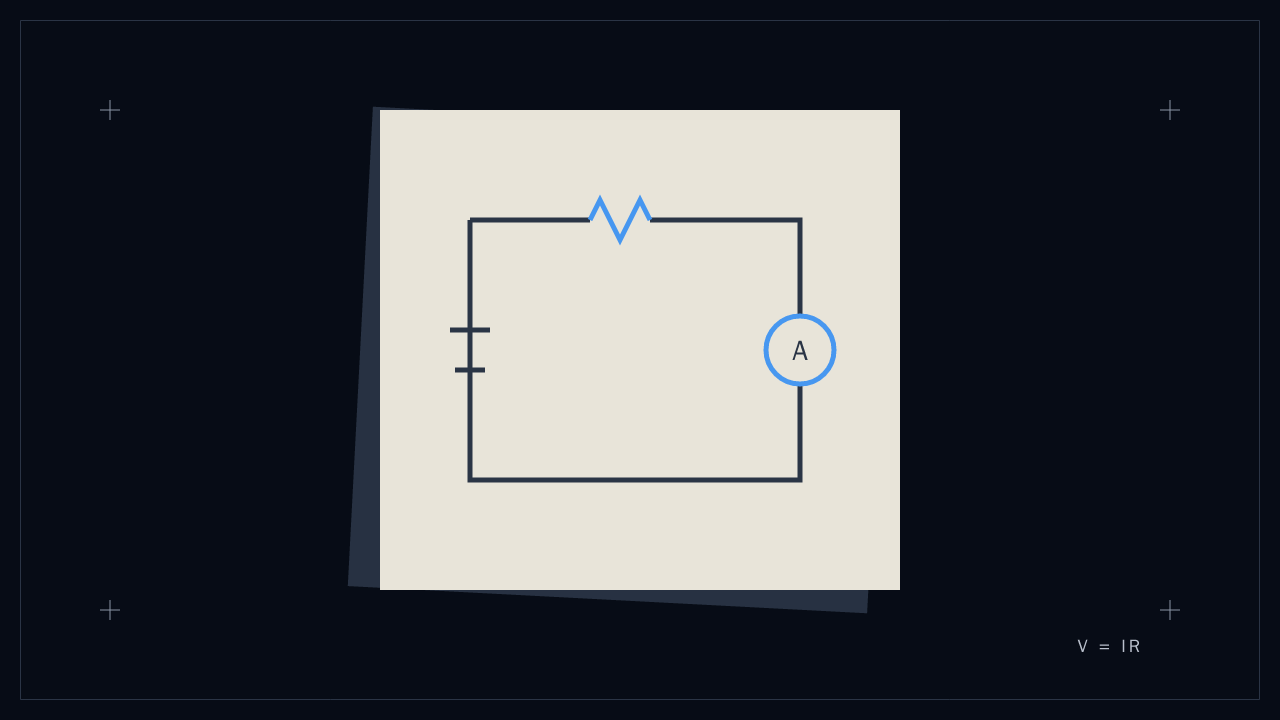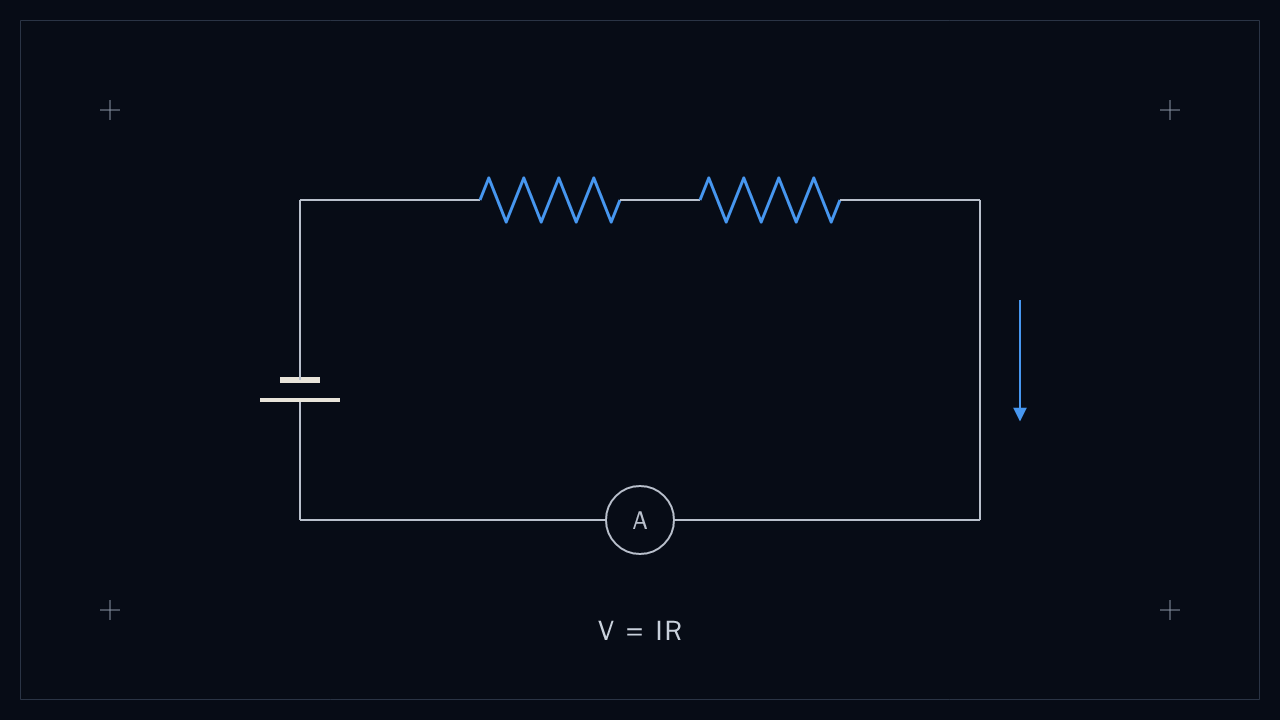
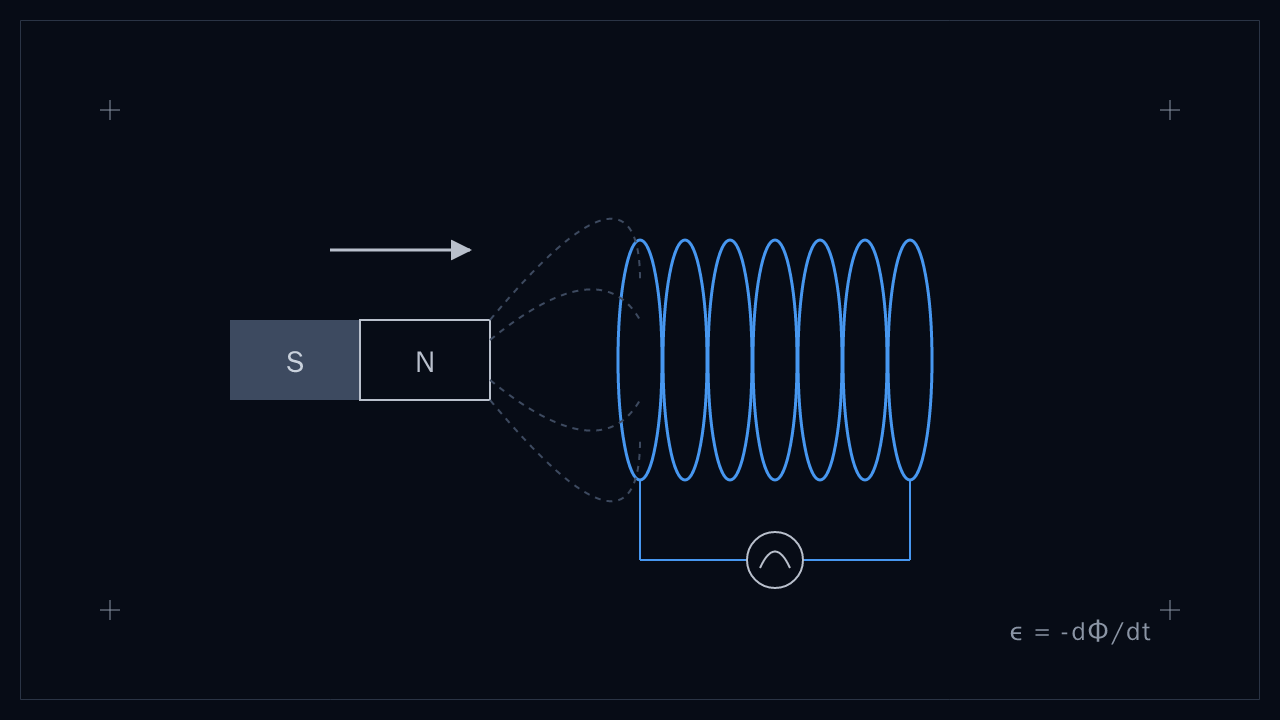
Knowing the size of a magnetic force is only half the work. You also need its direction, and that direction depends on the motion, the field and the sign of the charge.
Electromagnetism is easier to revise when you keep those questions separate. First decide whether a force exists and where it points. Then calculate its magnitude using the relevant angle.
Choose the method before calculating
Draw the velocity, field and force directions. For a charged particle, apply the direction rule for a positive charge first, then reverse it for a negative charge. Motion parallel to the field gives no magnetic force.
For induction, decide how the magnetic flux changes before using Lenz's law. The induced effect opposes the change in flux, which is more precise than saying it always opposes the field.
Formula reference
These relationships need the conditions stated in the question. Check units, signs and any restrictions before substituting values.
Force on a moving charge    F = qvB sinθ             N
Force on a wire             F = BIL sinθ             N
Unit of B                   tesla, T = N A⁻¹ m⁻¹ = Wb m⁻²
                            1 gauss = 10⁻⁴ T
Charge in a uniform field (v perpendicular to B)
  radius                    r = mv / (qB)
  period                    T = 2πm / (qB)   (does not depend on v)

μ₀ = 4π × 10⁻⁷ T m A⁻¹
Long straight wire          B = μ₀I / (2πr)
Solenoid                    B = μ₀nI   (n = turns per metre)

Torque on a coil            τ = NBIA cosα   (α = angle between coil plane and B)

Magnetic flux               Φ = BA cosθ   (θ from the normal)   Wb
Faraday's law               ε = −N ΔΦ/Δt
Motional emf                ε = BLv
Self-inductance             ε = −L ΔI/Δt;  energy = ½LI²   (L in henry, H)
Inductors: series L₁ + L₂, parallel like resistors

Ideal transformer           Vs/Vp = Ns/Np = Ip/Is

Galvanometer (resistance Rg, full-scale current Ig)
  to ammeter of range I     shunt Rs = IgRg / (I − Ig)   in parallel
  to voltmeter of range V   R = V/Ig − Rg               in series
Worked examples
Try each question before reading its solution. These are preparation examples, not official NET questions.
1. Force on a wire in gauss. A 40 cm wire carries 3 A in a field of 500 gauss, at 30° to the field. What force acts on it?
(a) 3 × 10⁻⁴ N (b) 3 × 10⁻² N (c) 3 × 10⁴ N (d) 3 × 10² N
B = 500 × 10⁻⁴ = 0.05 T
F = BIL sinθ = 0.05 × 3 × 0.4 × 0.5 = 0.03 N
Answer (b). Without the gauss conversion you get 300 N, option (d).
2. Proton in a magnetic field. A proton moves at 2 × 10⁶ m/s at right angles to a 0.5 T field. What is the radius of its path? (mₚ = 1.67 × 10⁻²⁷ kg, e = 1.6 × 10⁻¹⁹ C)
(a) 4.2 mm (b) 4.2 cm (c) 42 cm (d) 4.2 m
r = mv / (qB) = (1.67 × 10⁻²⁷ × 2 × 10⁶) / (1.6 × 10⁻¹⁹ × 0.5)
  = 3.34 × 10⁻²¹ / 8 × 10⁻²⁰ ≈ 0.042 m
Answer (b), about 4.2 cm. Double the speed and the radius doubles, but the time for one circle does not change.
3. Rod moving through a field. A 0.5 m rod moves at 4 m/s at right angles to a 0.2 T field. What emf appears across its ends?
(a) 0.1 V (b) 0.4 V (c) 2.5 V (d) 4 V
ε = BLv = 0.2 × 0.5 × 4 = 0.4 V
Answer (b).
4. Step-down transformer. An ideal transformer has 1000 primary turns on 220 V and 50 secondary turns. The secondary supplies 2 A. What are the secondary voltage and the primary current?
Vs = Vp × Ns/Np = 220 × 50/1000 = 11 V
Ip = Is × Ns/Np = 2 × 50/1000 = 0.1 A
Check: VpIp = 22 W = VsIs
A step-down transformer steps current up. Power in equals power out for an ideal transformer, which is a fast way to check your answer.
5. Galvanometer to ammeter. A galvanometer of resistance 50 Ω gives full-scale deflection at 1 mA. What shunt turns it into an ammeter reading up to 1 A?
(a) 0.05 Ω in parallel (b) 0.05 Ω in series (c) 950 Ω in series (d) 9950 Ω in series
Rs = IgRg / (I − Ig) = (0.001 × 50) / 0.999 ≈ 0.050 Ω, in parallel
Answer (a). To make a 0 to 10 V voltmeter from the same galvanometer instead, add 10/0.001 − 50 = 9950 Ω in series, which is option (d) and the most common wrong pick here.
Turn the examples into practice
Mix direction questions with numerical ones. In your error log, distinguish a sign mistake from using the wrong angle or confusing magnetic field with flux.
Use electromagnetism practice, revisit current electricity for circuit reasoning, and check the formula sheet during review.
Sources and scope
- Use the official subject weightings to check whether this subject belongs to your NET category.
- NUST does not publish a guaranteed chapter question count. These examples are for learning methods, not predicting a paper.
Source: HSSC textbook topics and SailToNUST practice material; NUST subject weightings reviewed October 2026