Returning to Mathematics for the Business NET can feel harder than starting a new subject. You may remember seeing every topic but struggle to decide which method a question needs. Begin by rebuilding the foundations, rather than opening a timed paper and judging yourself from the score.
This plan uses a learning order instead of a fixed promise about how many weeks you need. Move faster through familiar topics and give extra sessions to the ones that block later work.
Follow the prerequisites
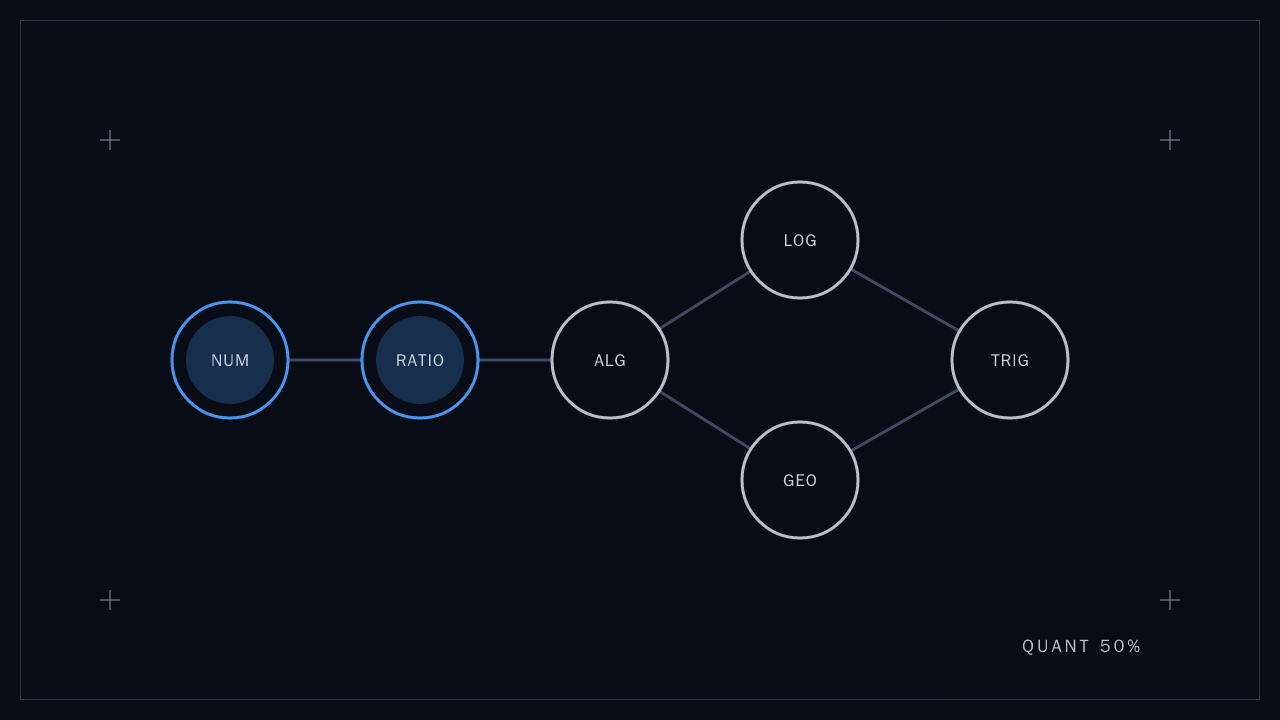
Start with fractions, percentages, ratios and basic number operations. Then move into algebra, exponents and logarithms. Geometry and probability become easier when that arithmetic no longer consumes all your attention.
Use short checks between stages. If you still confuse a percentage of the original value with a percentage of the new value, return to that distinction before making the questions longer.
The week labels below are a sample pace. They are not deadlines you must meet. College workload, your baseline and the test date decide how much you can do in a session.
Rebuild number sense
Chapter: functions, sets and number systems.
Most of what this chapter tests in our bank is integer handling, not set theory:
- Odd and even rules, such as "if yz + z is odd, which must be true?"
- Consecutive integers, such as "four consecutive even numbers multiply to 384"
- Place value, and counting terms in a sequence from first to last
- Order of operations and simplifying fractions without a calculator
Learn the odd-even table for sums and products, and the formula for the number of terms from a to b in steps of d: (b - a)/d + 1. Do 30 questions untimed, then 30 timed.
Practise ratios and percentages
Chapter: average. Despite the name, this is the arithmetic chapter. By keyword search, our 131 questions include about 38 on percentages, 28 on ages, 20 on profit, loss or discount, 19 on ratio, 16 on interest and 9 on work and days.
Study it in this order:
- Ratio and proportion. Reduce, split a total in a ratio, combine two ratios.
- Percentages. Percent of, percent change, successive changes. 20% up then 20% down is a 4% fall, not zero.
- Profit, loss and discount. All three are percent change on a named base. Find the base first.
- Simple interest and present worth. One formula, I = P x r x t, used forwards and backwards.
- Ages and work. Set up as a ratio or an equation. Work problems add rates (1/a + 1/b), not times.
Give this block two weeks. It is the largest block of everyday arithmetic on the paper, and every later chapter reuses it.
Connect arithmetic to algebra
Chapter: algebra and factorization. By keyword, 61 of its 132 questions involve powers.
- Exponent laws. Same base: add powers when multiplying, subtract when dividing, multiply for a power of a power.
- Identities. (a + b)², (a - b)², a² - b², and the cube forms. Learn the rearranged versions too: a² + b² = (a + b)² - 2ab.
- Symmetric sums. "If a + b + c = 6 and ab + bc + ca = 12, find a² + b² + c²." Square the first sum and subtract twice the second: 36 - 24 = 12.
- Factorising quadratics and inequalities, including the rule that multiplying by a negative flips the sign.
Use diagrams and geometry
Chapter: geometry, the largest quant chapter in our bank at 168 questions. By keyword, about 61 mention a circle, 52 ask for an area, 45 for an angle and 22 involve volume or capacity.
Order inside the chapter:
- Lines and angles. Parallel lines with a transversal, angles on a line and around a point.
- Triangles. Angle sum, exterior angle, isosceles and right-angle facts, Pythagoras triples (3-4-5, 5-12-13).
- Circles. Angle at the centre is twice the angle at the circumference, tangent meets radius at 90 degrees.
- Area and perimeter, then volume. Learn 1 litre = 1000 cm³; tank and aquarium questions turn on it.
Many questions come with a figure. Copy the figure, mark every angle you can deduce, then read the question again.
Move into mixed timed practice
Stop studying chapters. Do mixed 25-question sets drawn from all eight chapters, timed at about 70 seconds a question, and log each mistake by chapter. Any chapter with three or more mistakes in a set goes back into the next day's plan.
SailToNUST has no full-length NET-Business paper yet. Our full papers are NET-Engineering only. Choose a Business-specific timed paper for rehearsal, and check its format against the official pattern. Use chapter questions for focused work rather than treating an improvised set as an equivalent mock.
Your next step
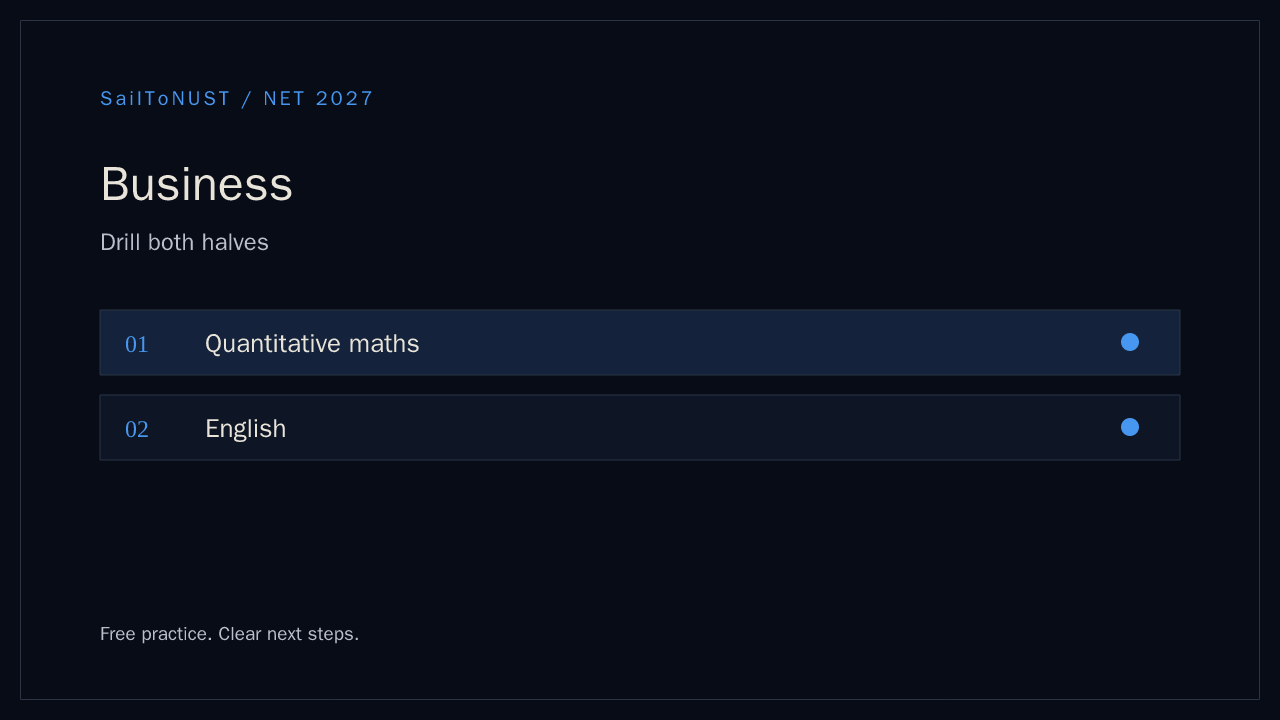
Start with the Quantitative Mathematics bank, then use the subject guide to check what you have covered. Leave a regular place for English practice.
Review the plan weekly. If a stage needs longer, reduce new work rather than skipping the mistakes. For admissions context, the BBA guide explains how the test fits the application.
Sources and scope
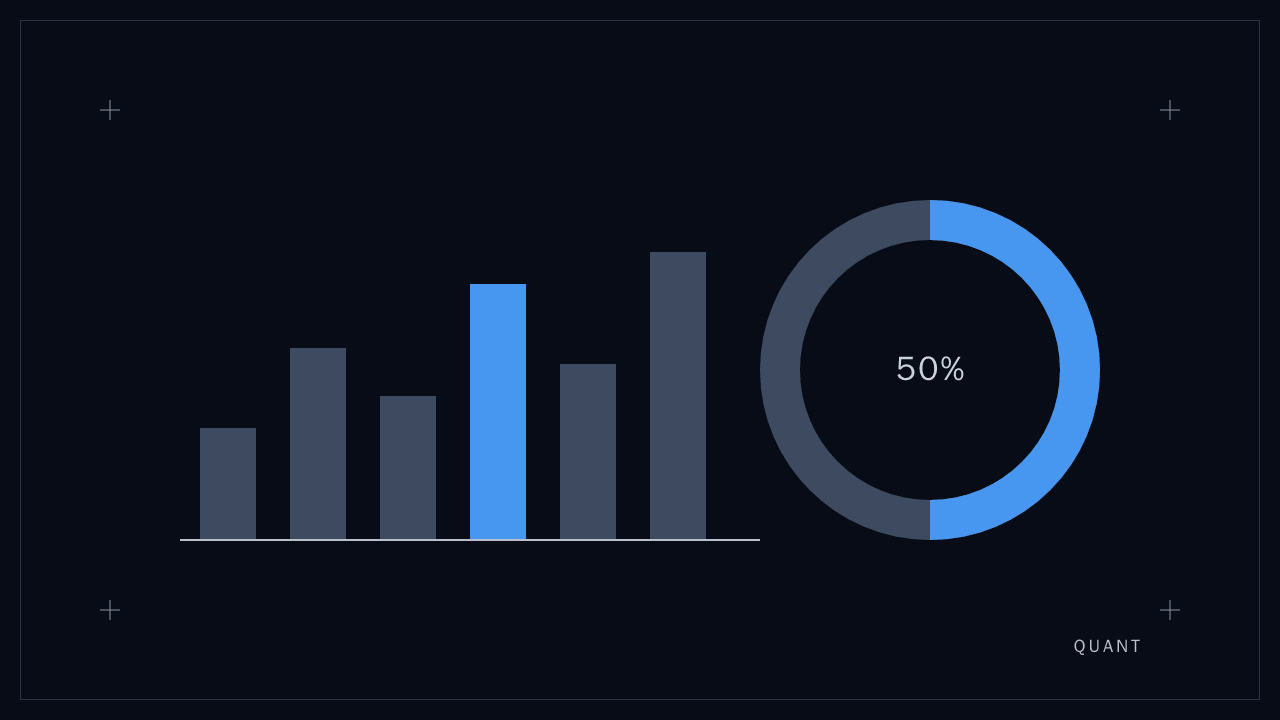
- NET-Business Studies and Social Sciences: Quantitative Mathematics 50%, English 50%
- About 100 maths questions is derived from the 200-MCQ total. NUST publishes percentages only
Source: NUST subjects included in NET with weightings and UG admissions FAQ pages, checked October 2026. Topic counts from the SailToNUST question bank.