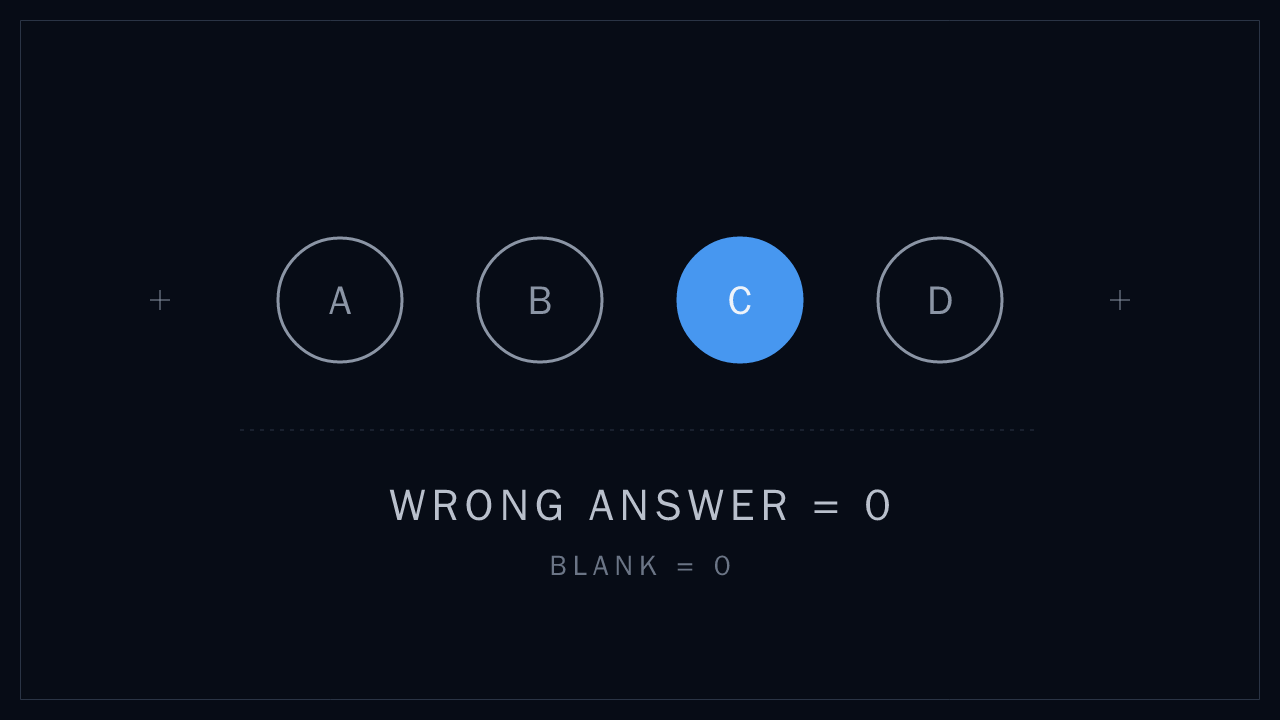
A wrong answer in NET does not subtract marks. That means leaving a question blank gives you no scoring advantage over making a guess, although the time you spend on the question still matters.
The practical task is to combine that rule with pacing. Solve what you can, use elimination where it helps, and make sure remaining questions receive a recorded answer before time ends. On CBNET, selecting an option and saving it are separate actions.
Use the rule without losing the clock
Do not confuse "no penalty" with "spend unlimited time guessing". A hard question can still cost marks indirectly if it prevents you reaching easier work later.
Use a consistent decision: solve, eliminate if possible, save an answer and move on when further work is unlikely to help. Revisit only if the interface and time allow it.
If you also prepare for a test with negative marking, rehearse its own rules separately. A strategy suitable for NET may be inappropriate for FAST or another exam.
Understand the scoring arithmetic
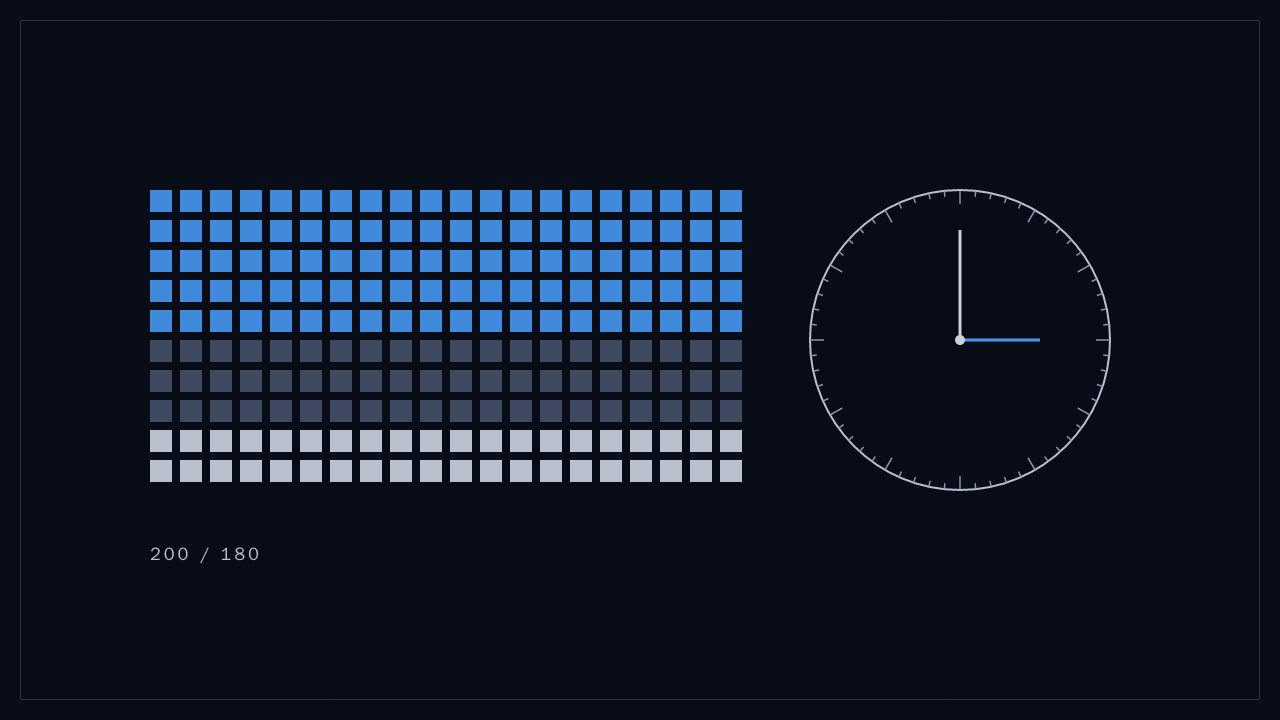
NET is 200 MCQs, each with four options. Every correct answer is one mark. A wrong answer costs nothing.
So a blind guess on a four-option question is worth a quarter of a mark on average. Leave 20 questions blank and you have thrown away about 5 marks in expectation. Under the merit formula, where NET carries 75% of your aggregate, 5 NET marks is close to 1.9 aggregate points. On a busy merit list that can be hundreds of positions.
expected marks from a blind guess = 1 / 4 = 0.25
20 blanks guessed                  = 20 * 0.25 = 5 marks
5 NET marks in the aggregate       = (5 / 200) * 75 = 1.875 points
And most guesses are not blind. If you can rule out two options, each guess is worth half a mark.
Avoid losing answers through time or controls
Habit from other tests. MDCAT, ECAT and many academy mock tests use negative marking or have used it in the past. Students carry the "skip if unsure" reflex into a test where it costs them.
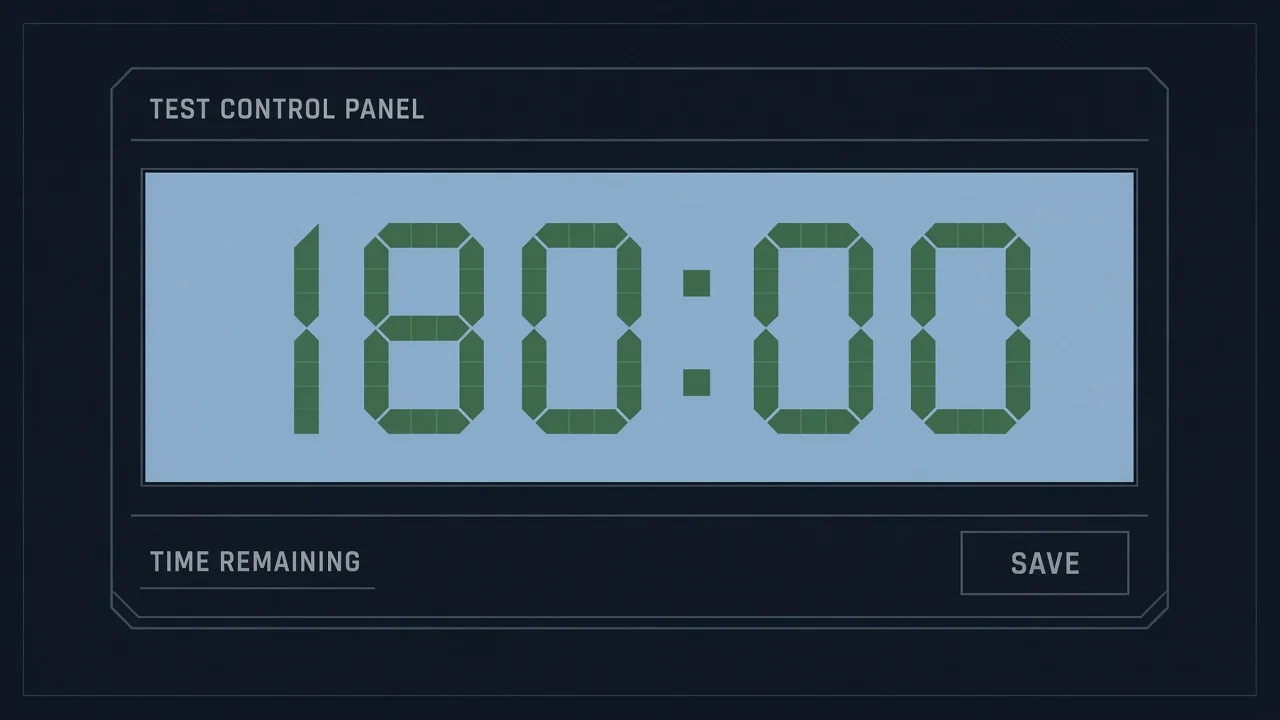
The interface. On the computer-based NET, choosing an option commits nothing until you press SAVE. A candidate can select an answer, move on, and leave the question blank without knowing it. This is the most common way blanks happen in CBNET, and it has nothing to do with strategy.
Running out of time. With 54 seconds a question, candidates who get stuck in Mathematics reach the end of the paper with 15 or 20 questions unseen.
Your next step
Use the pacing guide to plan when to move on. Try the simulator to make the save step familiar, then rehearse the complete process in full papers.
The paper-pattern guide explains the wider format. Always read the current test instructions on the day.
Sources and scope
- 200 MCQs in 180 minutes, one mark each
- Wrong answer: 0 marks
Source: NUST published NET test format, checked October 2026