The choice between computer-based and paper-based NET usually begins with where you can travel. Once that is settled, prepare for the way you will record answers, because the same knowledge can feel different on a screen and an answer sheet.
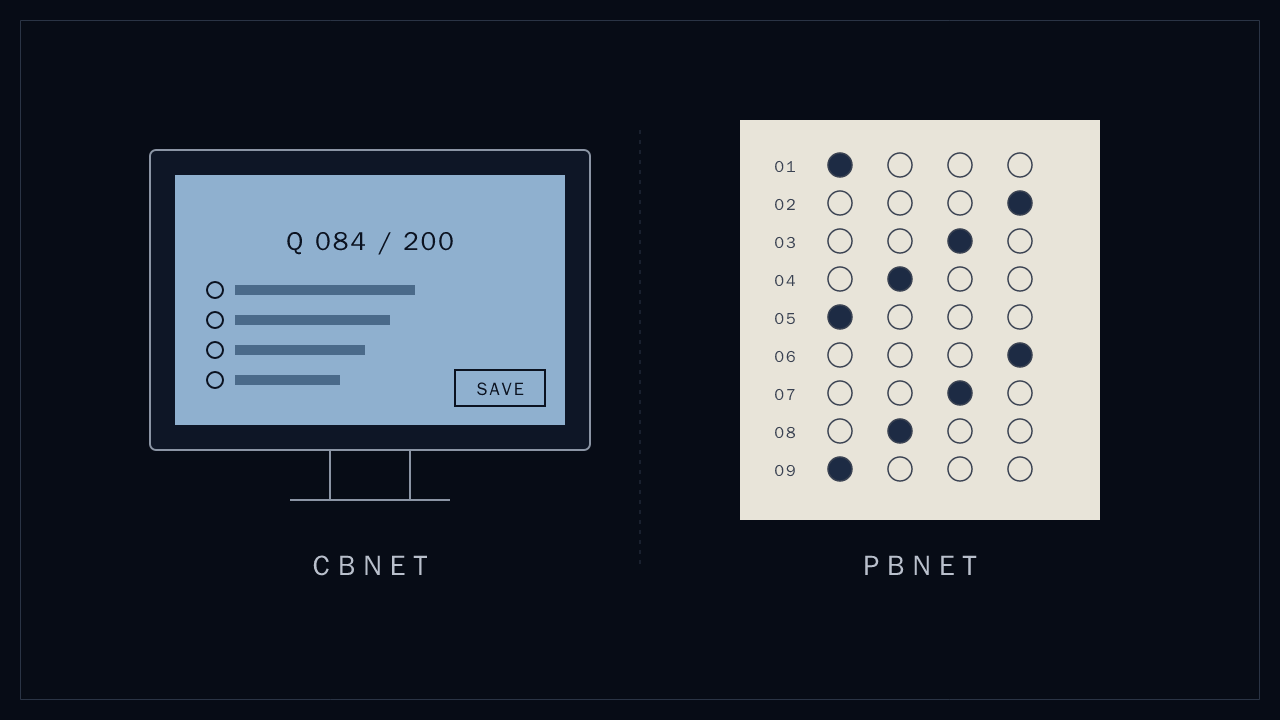
CBNET is the computer-based format used in Islamabad and Quetta. PBNET is the paper-based format used in Karachi and Gilgit. Available centres depend on the series, so check the current schedule before choosing a date.
Compare the differences
| Test experience | CBNET | PBNET |
|---|---|---|
| Answer on a computer | Yes | No |
| Separate paper answer sheet | No | Yes |
| Save answers using the client | Yes | No |
| Same subjects for the selected NET category | Yes | Yes |
| Every centre available in every series | No | No |
How to use this in your plan
Choose a centre you can reach without turning the test into an exhausting trip. Consider travel, accommodation and the series available, rather than assuming one mode gives easier questions.
For CBNET, rehearse saving answers and moving through the client. For PBNET, practise recording answers on a separate sheet under the clock. Do not leave a large transfer task to the final moments.
The content weights belong to your NET category, not to the mode. An Engineering candidate still prepares Mathematics, Physics and English whichever format they sit.
Check the centres and result timing
| City | Centre | Mode | Result |
|---|---|---|---|
| Islamabad | H-12 Campus | CBNET | about 24 hours |
| Quetta | NUST Balochistan Campus | CBNET | about 24 hours |
| Karachi | DHA City Campus | PBNET | 5 to 7 working days |
| Gilgit | APS Jutial | PBNET | 5 to 7 working days |
Islamabad hosts CBNET in all four series. Quetta, Karachi and Gilgit only appear in some series. In the NET-2026 cycle, Karachi PBNET ran in Series-2 and Series-4, Gilgit in Series-4 only, and Quetta in Series-2 and Series-4. Check the dates page for the current cycle before you plan travel.
Practise how you will record answers
CBNET runs on NUST's own test client. It is a plain interface, and it has a few behaviours that surprise first-time candidates:
- You must press SAVE on every answer. Selecting an option does nothing on its own.
- You cannot flag a question until it has a saved answer.
- There is no question grid. You move with Next, Prev, First and Last.
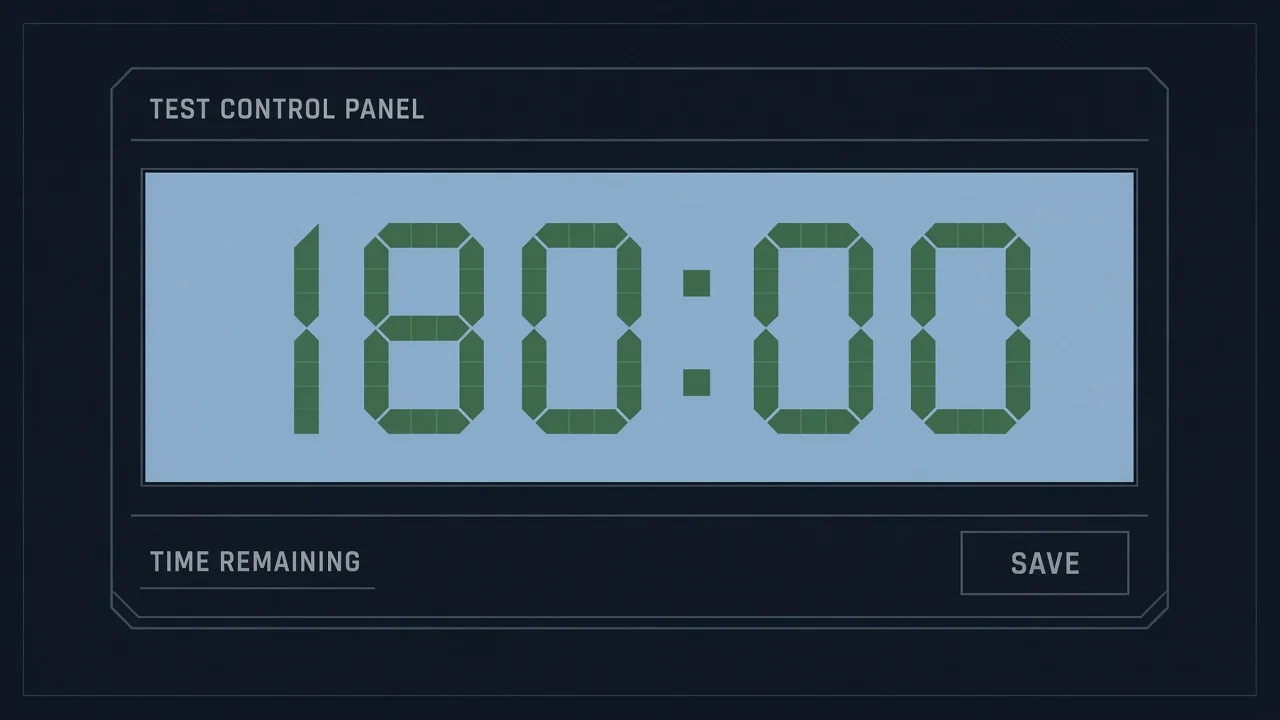
- One clock runs for the whole paper, with no per-section timer.
PBNET is a printed booklet and an answer sheet. You can see the whole paper, jump to any question, and work in whatever order you like. The cost is bubbling: every answer has to be transferred to the sheet by hand, and that time comes out of the same 180 minutes.
Your next step
Check the official 2027 schedule before booking travel. The registration guide explains the application steps.
For computer-based practice, try the simulator and pacing guide. For paper-based practice, use an appropriate practice paper and answer sheet. SailToNUST's online full-paper page is not a print-download service.
Sources and scope
- Same paper in both modes: 200 MCQs, 180 minutes, no negative marking
- CBNET: Islamabad in every series, Quetta in some. Result in about 24 hours
Source: NUST NET-2026 schedule and centres, checked October 2026