A weaker FSc result does not automatically end your NUST plan. NET carries most of the standard aggregate, so improving the test score can offset some of the difference in board marks.
There is a limit: eligibility comes first. A high NET score does not cancel a minimum qualification requirement. Check that floor, then use the formula to calculate what improvement would mean for your own marks.
Calculate the gap you can influence
Compare two versions of your aggregate with the same SSC and HSSC inputs and different NET scores. That shows the effect of test preparation without relying on another applicant's result.
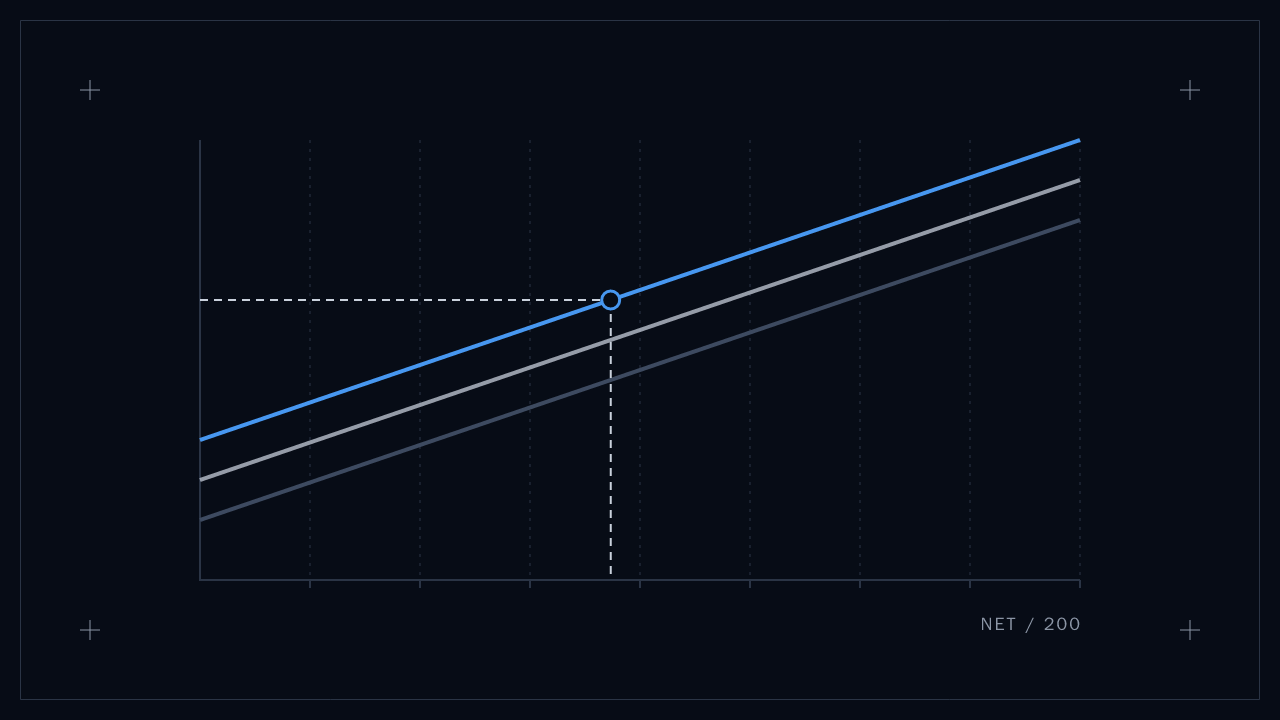
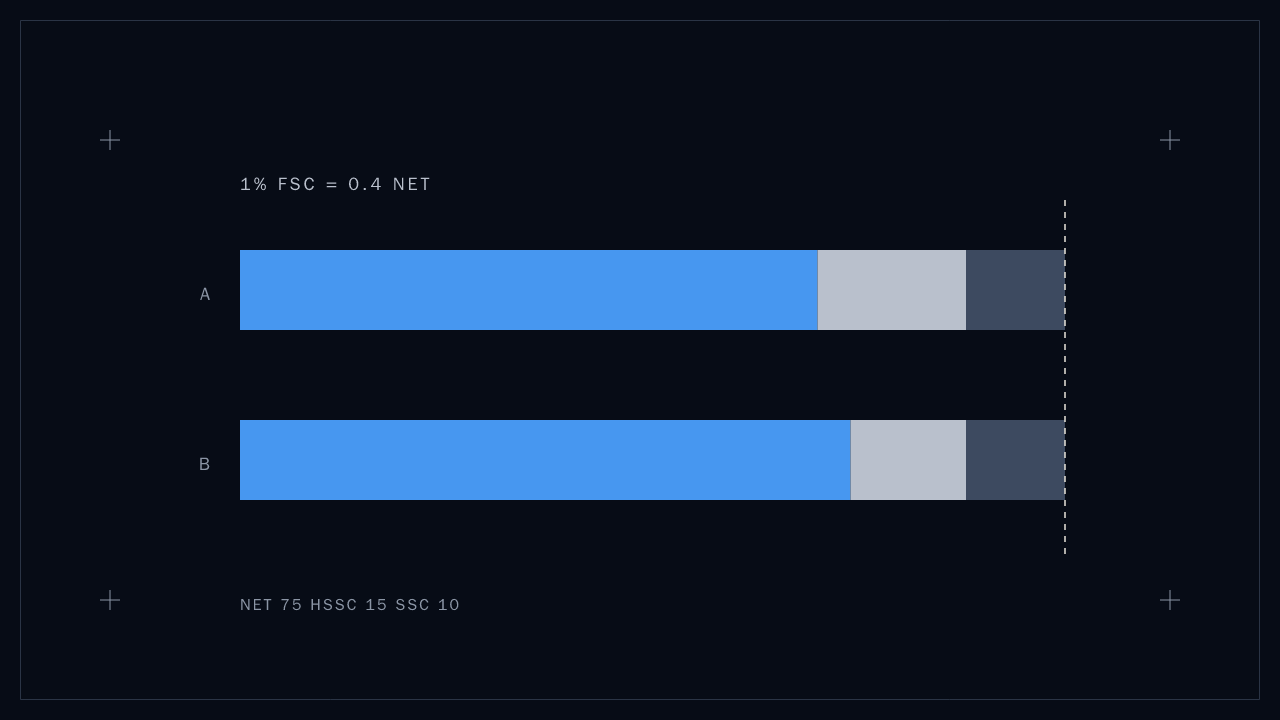
For the standard weights, a ten-percentage-point gap in HSSC contributes a 1.5-point aggregate difference. Four additional NET marks contribute the same 1.5 points. This is arithmetic within the formula, not a prediction that four marks will secure a particular programme.
If you are below the eligibility threshold, investigate the qualification issue before planning a score target. Better preparation is useful, but it cannot change the application rule.
Compare example applicants
Take a student with 90% in both matric and FSc who scores 140 in NET:
Student A:  140/200 x 75 = 52.50
            90 x 0.15    = 13.50
            90 x 0.10    =  9.00
            aggregate    = 75.00
Student B has the same matric but only 70% in FSc. What NET score ties with A?
Student B:  70 x 0.15 = 10.50
            90 x 0.10 =  9.00
            NET points needed = 75.00 - 19.50 = 55.50
            NET needed = 55.50 / 0.375 = 148
Twenty points of FSc cost 8 NET marks. B ties with A at 148.
Student C is near the floor on both: 62% in FSc and 65% in matric.
Student C:  62 x 0.15 = 9.30
            65 x 0.10 = 6.50
            NET points needed = 75.00 - 15.80 = 59.20
            NET needed = 59.20 / 0.375 = 157.9, so 158
C needs 18 more NET marks than A to reach the same aggregate. That is a real gap, but on a paper where one extra correct answer in every eleven questions closes it.
Respect the eligibility floor
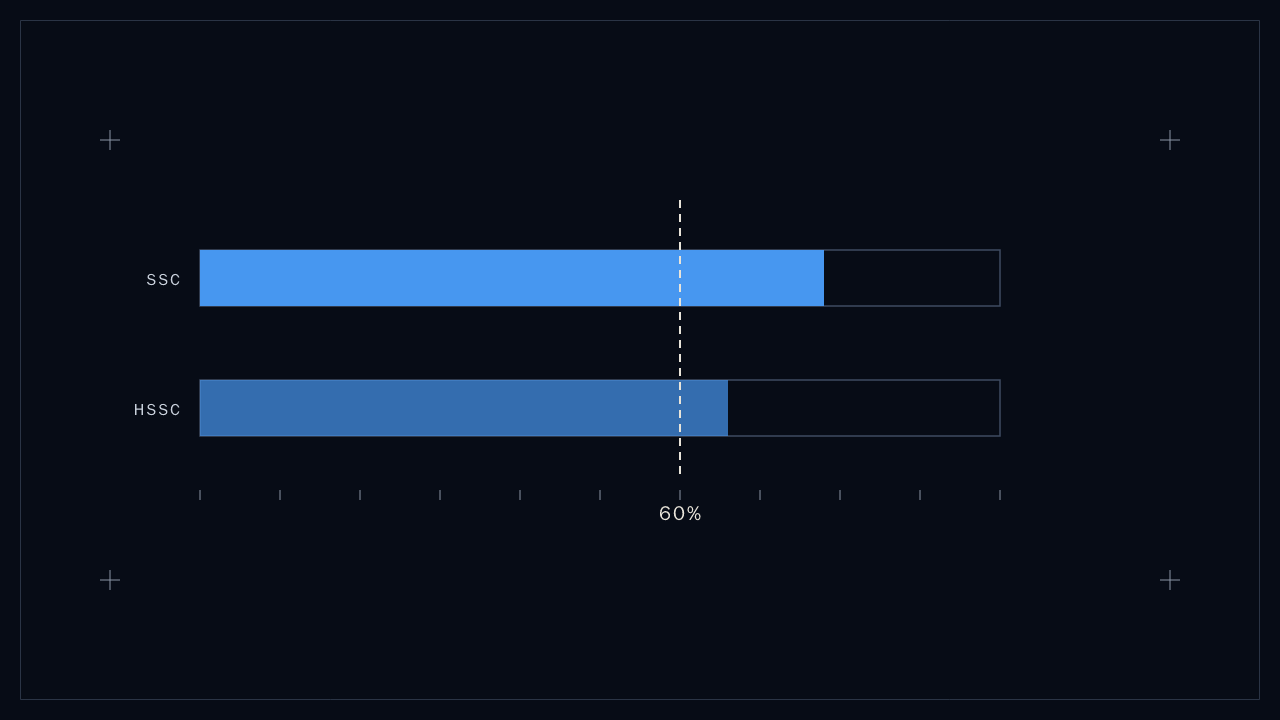
NUST's ineligibility criteria list "less than 60% marks in SSC and HSSC". The eligibility page asks for a minimum 60% each in SSC and HSSC. A 190 in NET does not change that.
There is one detail most students miss. NUST's FAQ says a candidate with less than 60% in FSc Part-1 can still apply, and the Part-1 marks are used for merit. But on joining, the candidate must have 60% or more in the complete FSc result. So:
- Part-1 below 60%: you can sit NET and appear on the merit list.
- Full FSc below 60%: the admission cannot be confirmed, whatever your NET score.
If your Part-1 is weak, your Part-2 board exams decide whether your NET score counts at all. Don't let NET preparation crowd them out.
Your next step
Check eligibility and enter your marks into the aggregate calculator. Then read what score you may need to understand target assumptions.
For improvement, start from a reviewed paper and the chapter bank. Choose the topics behind your losses rather than trying to make every chapter equally strong at once.
Sources and scope
- Merit on NET basis: NET 75%, HSSC (Part-1) or HSSC 15%, SSC 10%
- Same weights for every NET-basis programme. Programmes differ only in which NET paper counts
Source: NUST merit generation criteria, eligibility criteria, ineligibility criteria and UG admissions FAQ pages, checked October 2026